Chest Compressions: How Do They Work? Why Are They So Important?
This article explains how chest compressions work during CPR, why they are essential for maintaining blood flow to the brain and other vital organs, and the recommended compression rate and depth for adults, children, and infants.
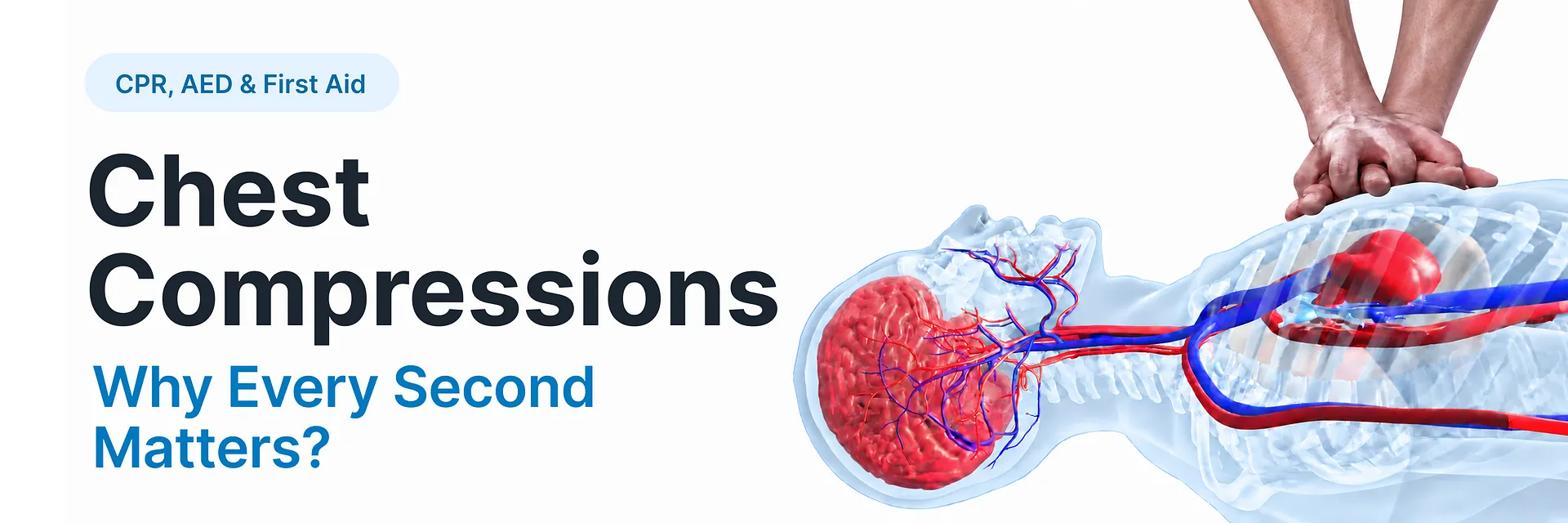
Chest compressions act as a temporary pump when the heart can no longer circulate blood effectively. Learn how they support blood flow to the brain, why every second matters, and how CPR helps buy time during cardiac arrest.
What Do Chest Compressions Actually Do During CPR?
Most people know that CPR involves pushing hard and fast on someone’s chest. But what are those compressions actually doing, and why does every second matter?
Think of the heart as the body’s built-in pump. With every beat, it sends oxygen-rich blood to the brain and other vital organs. During cardiac arrest, that pump suddenly stops working effectively. The heart may stop completely or develop an abnormal rhythm that prevents it from pumping blood, but the result is the same: blood is no longer circulating normally.
Within seconds, the person may become unresponsive because the brain is no longer receiving enough oxygenated blood. Brain cells begin to suffer damage as oxygen deprivation continues, and after about five minutes without CPR, some of that damage may become irreversible. The risk and extent of permanent brain injury continue to increase with every passing minute, which is why CPR should begin as soon as cardiac arrest is recognized.
Chest Compressions Act as a Temporary Manual Pump
Chest compressions are sometimes described as “heart massage,” but that phrase can be misleading. You are not massaging the heart, and CPR does not usually restart it on its own.
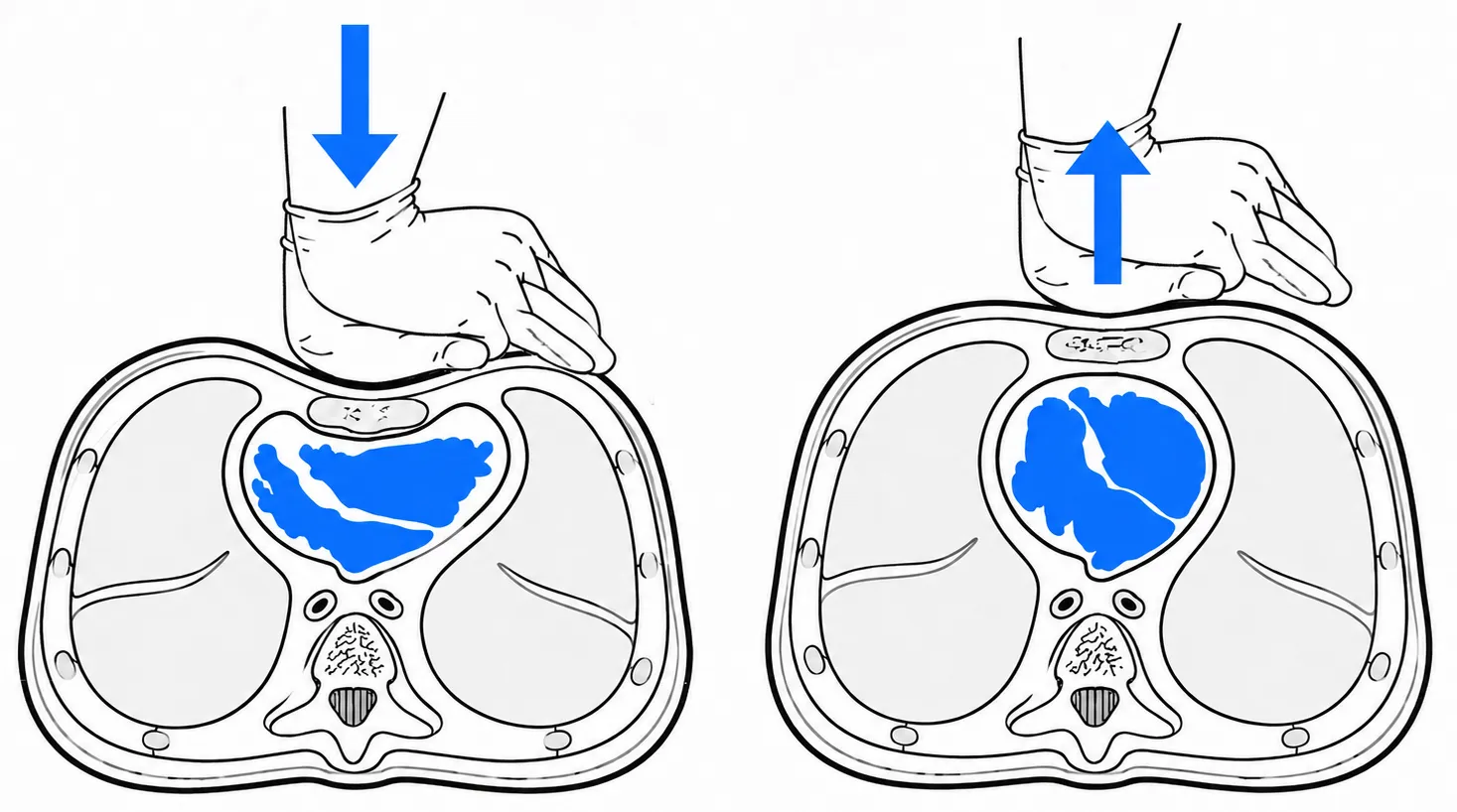
Instead, each compression creates pressure inside the chest and helps push a small but essential amount of blood toward the brain, heart, and other vital organs. When you release the pressure and allow the chest to return to its normal position, blood can flow back and refill the heart and chest vessels before the next compression.
In simple terms:
-
Pressing down helps move blood forward.
-
Allowing full chest recoil lets the circulation refill.
-
Repeating this cycle creates temporary blood flow while the heart cannot pump effectively on its own.
CPR cannot produce the same circulation as a normally beating heart. However, even partial blood flow can help preserve the brain and other organs until an AED is used or emergency medical professionals arrive. The American Heart Association notes that immediate CPR can double or triple a person’s chance of surviving cardiac arrest.
Does CPR Restart the Heart?
Usually, chest compressions do not “start” the heart in the way movies often suggest. Their primary job is to buy time.
An automated external defibrillator, or AED, can analyze the heart’s rhythm and deliver a shock when an appropriate shockable rhythm is present. Chest compressions help maintain some circulation until defibrillation and advanced treatment become available.
This is why CPR and early AED use work together: compressions support temporary blood flow, while the AED may help restore an effective heart rhythm.
For a more complete explanation of how to recognize cardiac arrest, perform CPR, use an AED, and respond to other common emergencies, explore our online CPR, AED & First Aid course.
How Deep Should Chest Compressions Be?
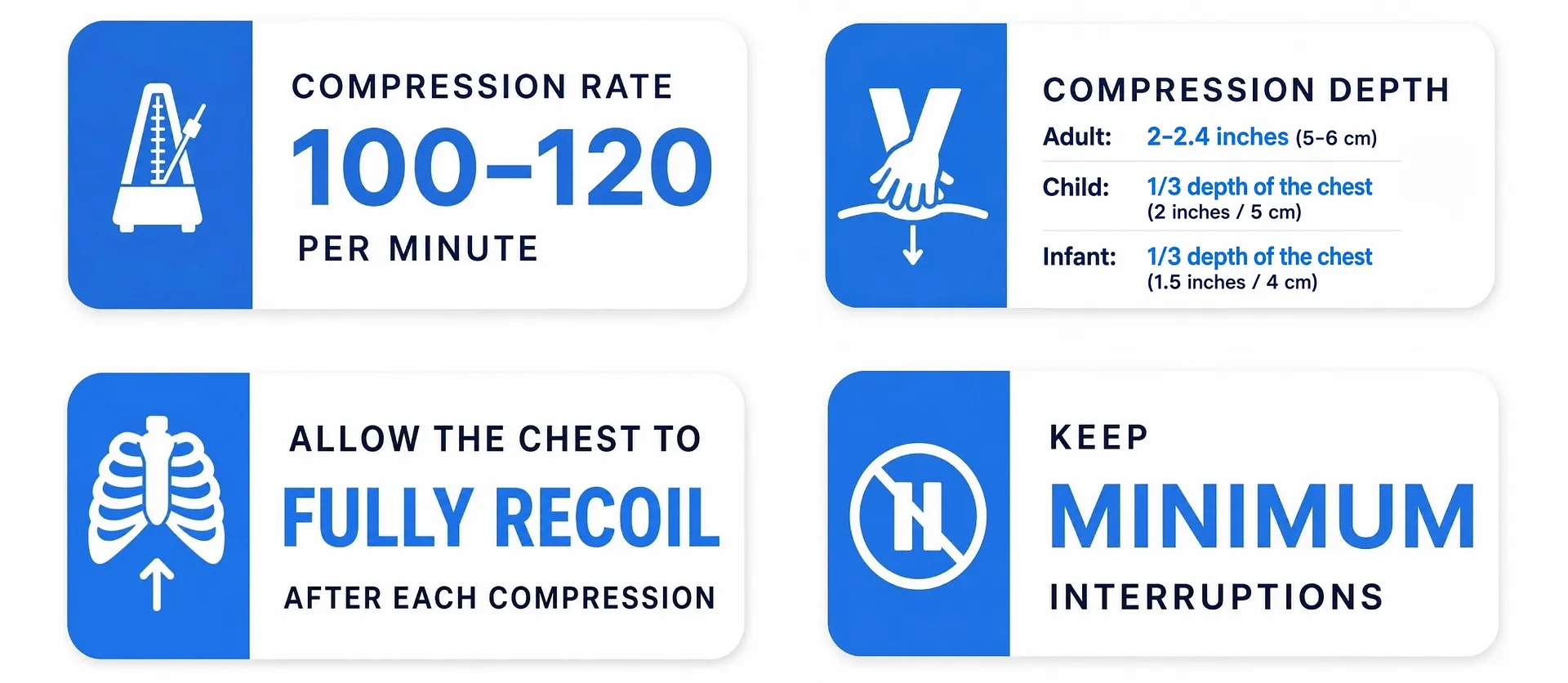
According to the latest American Heart Association’s CPR guidelines, compression depth depends on the person’s age and size:
|
Person |
Recommended compression depth |
|---|---|
|
Adult |
At least 2 inches (5 cm), while avoiding depths greater than 2.4 inches (6 cm) |
|
Child |
About 2 inches (5 cm), or at least one-third the depth of the chest |
|
Infant |
About 1.5 inches (4 cm), or at least one-third the depth of the chest |
For adults, children, and infants, compressions should generally be delivered at a rate of 100 to 120 per minute. Allow the chest to recoil fully after every compression and keep interruptions as short as possible.
What About Rib Fractures During CPR?
One understandable concern is whether pressing this deeply can injure the chest. Rib fractures are a recognized complication of CPR, particularly in older adults and people with more fragile bones, but they are not inevitable and do not automatically mean that compressions were performed incorrectly.
A 2024 systematic review and meta-analysis covering 74 studies and 16,629 adult patients found rib fractures in approximately 55% of cases. However, this figure requires context: most patients were examined using detailed CT scans or autopsies capable of detecting even small or incomplete fractures, and some received prolonged or mechanically assisted CPR. It should not be interpreted as the risk associated with every episode of bystander CPR.
Because effective compressions must move the chest far enough to generate blood flow, a rib fracture can occur even with correct technique. If a rescuer hears or feels a crack, they should quickly confirm that their hands are positioned in the center of the chest on the lower half of the sternum and continue compressions. A suspected rib injury is not a reason to stop CPR or make compressions too shallow. A rib fracture can be treated after the person is stabilized. During cardiac arrest, the immediate priority is keeping blood flowing to the brain and other vital organs to give the person the best possible chance of survival.
Why Starting CPR Matters
If someone suddenly collapses, does not respond, and is not breathing normally (or is only gasping) — cardiac arrest should be suspected. Call 911 or your local emergency number, send someone for an AED, and begin CPR.
For an adult who suddenly collapses, hands-only CPR is appropriate for a bystander who is not trained or does not feel able to provide rescue breaths. Conventional CPR with compressions and breaths is especially important for infants, children, drowning emergencies, and arrests caused by breathing problems.
You do not need to make the heart beat with your hands. Your immediate goal is simpler and extremely important: keep some oxygenated blood moving until more advanced help can take over.
Key Takeaway: Chest compressions temporarily take over part of the heart’s pumping function. They do not cure cardiac arrest, but they can help protect the brain, preserve vital organs, and give the person a better chance of surviving.
Was this article helpful?
Quick tip: Let us know if this article was helpful and discover a special discount code for your upcoming certification.
Preparing for CPR Certification?
Get officially certified in CPR, AED & First Aid online with a flexible course you can finish at your own pace. Complete it in under an hour and receive your provider card instantly.
Get Certified