BLS vs CPR Certification: What’s the Difference?
This article explains the difference between BLS and CPR certification, what each type of training covers, who each is designed for, and how to choose the right certification for your professional or personal needs.
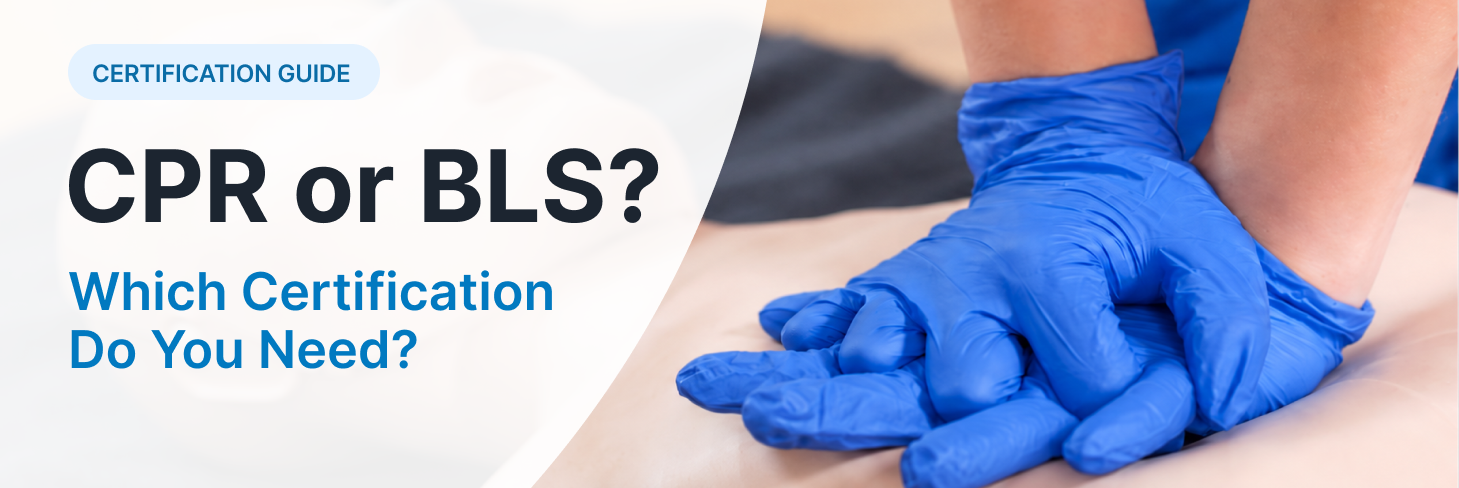
CPR and BLS are closely related, which is why the terms are sometimes used interchangeably. Both can cover cardiopulmonary resuscitation, automated external defibrillator (AED) use, rescue breathing, and choking response.
However, a CPR certification card and a BLS provider card are not automatically interchangeable.
The main difference is their intended purpose:
-
CPR certification is generally designed for workplace responders, teachers, childcare professionals, coaches, caregivers, and members of the public.
-
Basic Life Support (BLS) certification is primarily designed for healthcare professionals, first responders, healthcare students, and others who may participate in professional resuscitation.
Quick Answer
Choose CPR certification if you need practical CPR, AED, choking, and First Aid training for a role in the workplace, education, childcare, fitness, caregiving, or the community role - or simply want to be prepared for emergencies at home or in everyday life.
Choose BLS certification if you work or study in healthcare, may participate in a resuscitation team, or have specifically been asked to provide a BLS provider card.
If an employer, school, licensing body, or credentialing organization names a particular certification, follow that requirement.
What Is CPR Certification?
CPR stands for cardiopulmonary resuscitation.
It is an emergency lifesaving procedure performed when a person is in cardiac arrest and the heart is no longer pumping blood effectively. CPR helps maintain blood flow to the brain and other vital organs until signs of circulation return or trained emergency responders take over.
The term “CPR certification” is broad, so the exact curriculum depends on the course and training provider. Some programs focus primarily on CPR and AED use, while others include First Aid and additional emergency-response topics.
For example, the Pulse Medical Certification CPR, AED & First Aid course covers:
-
First Aid principles
-
Adult, Child, and Infant CPR
-
AED use
-
Choking relief
-
Bleeding control and shock
-
Recognition of heart attack, stroke, and seizures
-
Interactive emergency scenarios
This type of course is intended to prepare people for emergencies that may happen at work, at school, at home, or in the community.
What Is BLS Certification?
BLS stands for Basic Life Support.
CPR is a central part of BLS, but BLS places those skills in a more professional and clinically focused resuscitation context.
BLS training covers recognition of cardiac and respiratory emergencies, high-quality CPR, AED use, ventilation, airway obstruction, and coordinated response between multiple rescuers.
For example, the Pulse Medical Certification BLS course covers:
-
AHA Chain of Survival
-
Adult, Child, and Infant CPR
-
AED use
-
Airway management & ventilation
-
Bag-valve-mask ventilation
-
Foreign-body airway obstruction (FBAO)
-
Adult and pediatric BLS algorithms
-
Special circumstances (pregnancy, drowning & opioid-associated emergencies)
-
BLS team dynamics
-
Interactive emergency scenarios
BLS is primarily intended for healthcare professionals and other personnel who may be expected to perform CPR or support a resuscitation response as part of their professional responsibilities.
BLS vs CPR: Key Differences
This comparison reflects Pulse Medical Certification courses; other providers’ course content may vary.
|
Feature |
CPR Certification |
BLS Certification |
|---|---|---|
|
Training emphasis |
Emergency preparedness for everyday life and the workplace |
Basic life support in healthcare and professional response settings |
|
Adult, child, and infant CPR |
Yes |
Yes |
|
AED use |
Yes |
Yes |
|
Choking response |
Yes |
Yes |
|
Ventilation |
Basic rescue-breathing skills |
Rescue breathing and airway support for healthcare responders |
|
Bag-valve-mask use |
Not included |
Yes |
|
Response procedures |
Essential steps for recognizing an emergency and providing CPR |
Adult and pediatric BLS algorithms for cardiac and respiratory emergencies |
|
Multi-rescuer CPR and team dynamics |
Not a primary focus |
Yes — rescuer coordination, defined roles, and team communication |
|
Additional emergency topics |
Yes — heart attack, stroke, seizures, bleeding, shock, and basic opioid overdose response |
Yes — drowning, cardiac arrest in pregnancy, and opioid-associated emergencies |
|
Practice scenarios |
Everyday emergencies at home, work, or in public |
Clinical emergencies involving assessment, resuscitation, and team response |
The difference is not that CPR teaches resuscitation while BLS teaches something entirely separate. Both courses teach CPR, but BLS adds a stronger focus on ventilation, multi-rescuer performance, defined team roles, and the way resuscitation is organized in healthcare and professional-response environments.
At the same time, a combined CPR and First Aid course covers bleeding, shock, seizures, stroke recognition, and other emergencies that are not typically included in a standalone BLS course.
That is why BLS should not simply be described as a “better” version of CPR. The right course depends on the skills and provider card you need.
Who Should Choose CPR Certification?
CPR certification is generally appropriate for people who need practical emergency-response skills but are not expected to participate in clinical resuscitation as healthcare providers.
This may include:
-
Teachers and school staff
-
Daycare and childcare professionals
-
Coaches and fitness instructors
-
Workplace safety responders
-
Caregivers
-
Camp and recreation staff
-
Volunteers
-
Parents and family members
-
Members of the public who want to be prepared
Depending on the position, these individuals may need CPR and AED training, First Aid, pediatric CPR, or a combination of these subjects.
Because requirements differ between employers, states, licensing agencies, and professional organizations, learners should verify the exact course content required for their role.
Who Should Choose BLS Certification?
BLS is generally the more appropriate option for people who may respond to cardiac or respiratory emergencies in a healthcare or prehospital environment.
This may include:
-
Nurses and physicians
-
EMTs and paramedics
-
Medical assistants
-
Patient care technicians
-
Respiratory therapists
-
Dentists and dental hygienists
-
Other allied health professionals
-
Healthcare students entering clinical rotations
-
Skilled nursing and long-term care staff
-
Clinical staff working in procedural settings
However, a job title alone does not determine the required certification. Two professionals with similar roles may work for organizations with different credentialing policies.
If your employer or clinical program asks specifically for a BLS provider card, choose BLS unless the organization confirms that another certification will be accepted.
How Long Are CPR and BLS Certifications Valid?
Certification periods depend on the training provider.
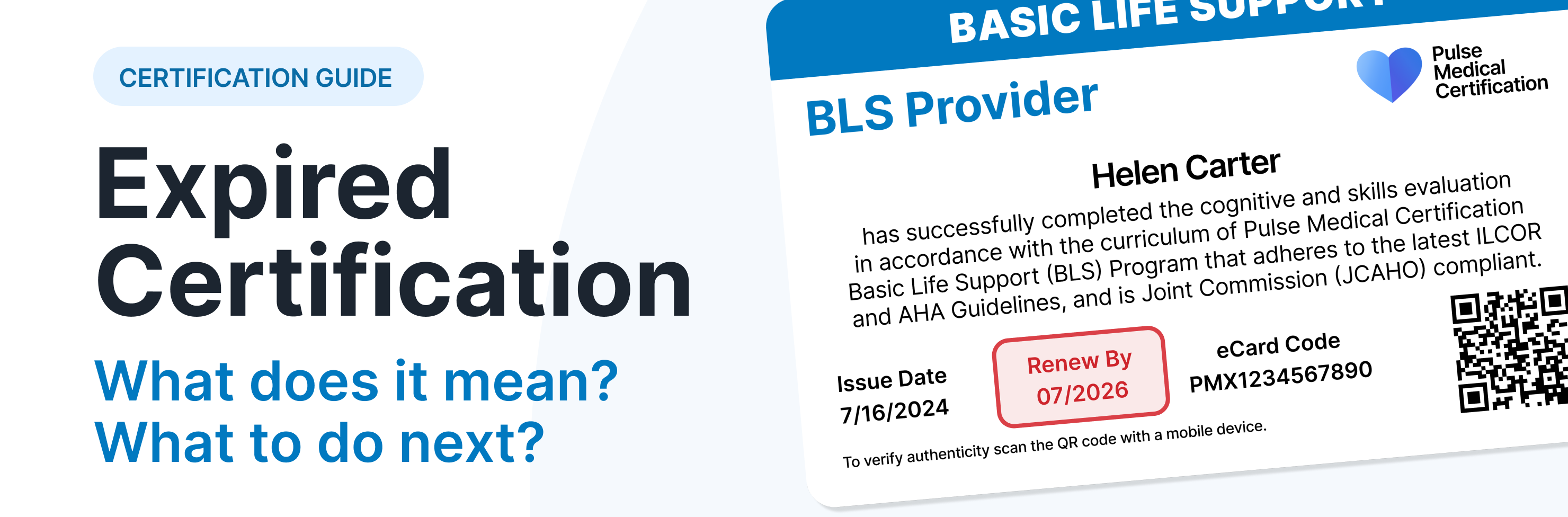
Pulse Medical Certification CPR and BLS provider cards are valid for two years from the date of issue.
Employers, schools, or licensing organizations may establish additional renewal or competency requirements. Always follow the policy that applies to your specific role.
BLS vs CPR: The Bottom Line
CPR and BLS share the same lifesaving foundation, but their provider cards represent different scopes of training.
CPR certification is generally designed for workplace and community responders. It covers recognition of cardiac arrest, CPR, AED use, and choking response. When combined with First Aid, it may also include bleeding, shock, seizures, stroke, and other common emergencies.
BLS certification is primarily designed for healthcare professionals, trained first responders, and healthcare students. It includes CPR while adding greater emphasis on ventilation, airway support, multi-rescuer response, team dynamics, and professional application.
Neither certification is automatically better, and neither provider card is universally accepted in place of the other.
-
If your requirement says BLS, choose BLS.
-
If it says CPR/AED or CPR and First Aid, choose training that specifically includes those subjects.
-
If the requirement names a provider, course format, or skills assessment, make sure your selected course matches those details.
When the requirement is unclear, confirm it with your employer, school, licensing agency, or credentialing department before enrolling.
Was this article helpful?