What Happens If My ACLS, BLS, PALS or CPR Certification Expires?
This article explains how long ACLS, BLS, PALS and CPR certifications remain valid, what an expired provider card may mean for your job, and what to do if your certification has already expired.
How Long Are ACLS, BLS, PALS and CPR Certifications Valid?
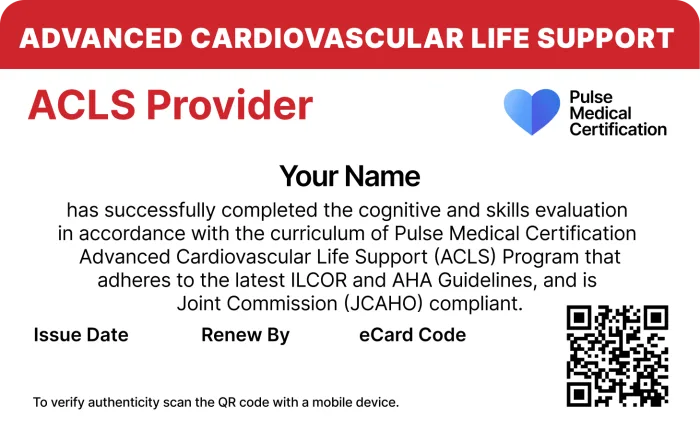
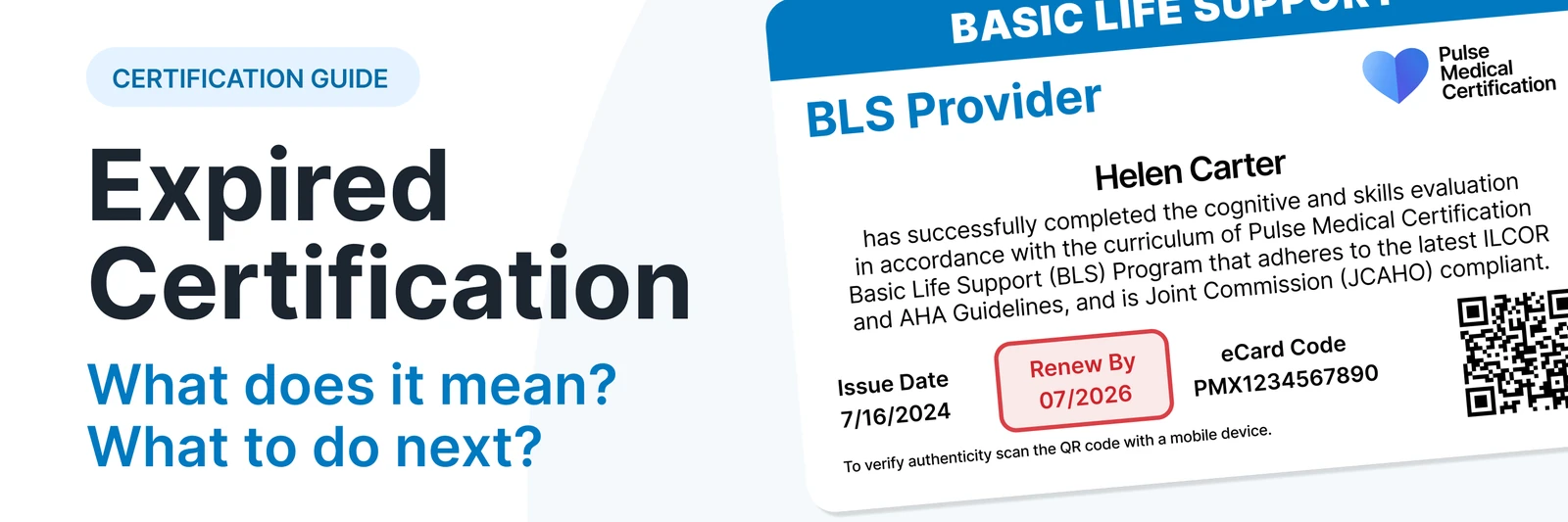
ACLS, BLS, PALS and CPR provider cards are commonly issued with a two-year validity period. The exact expiration date is listed on the provider card and should be used when planning renewal.
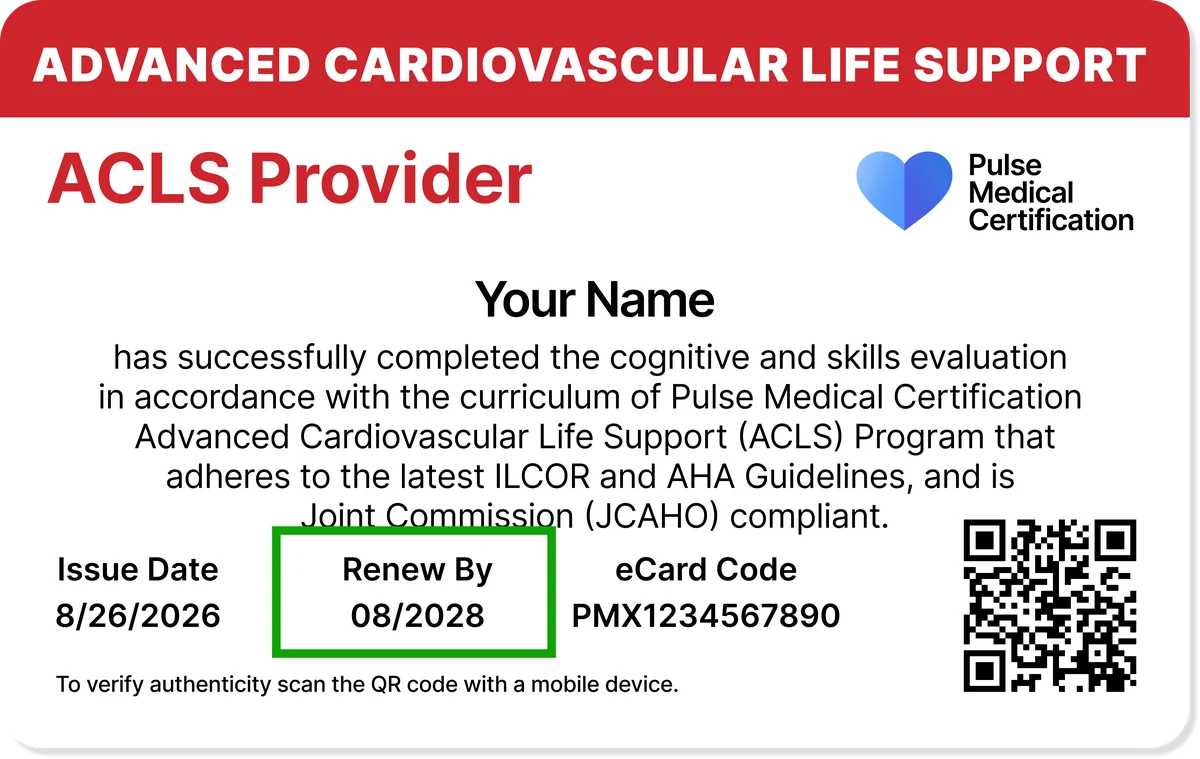
These certifications are often required by hospitals, healthcare systems, EMS agencies, clinical programs, and other employers for positions that involve responding to cardiac, respiratory, or other medical emergencies. It is also important to distinguish a provider card from a professional healthcare license. A medical, nursing, or other professional license is issued and maintained separately. BLS, ACLS, PALS and CPR certifications are additional training credentials that may be required for a specific job or clinical role.
Because of that distinction, an expired ACLS/BLS/PALS provider card does not automatically invalidate a medical or nursing license. However, it may mean that the employee no longer meets one of the requirements for their current position until the certification is renewed.
Why Are Certification Renewals Easy to Miss?
Healthcare professionals often hold several certifications at the same time, and each one may have a different expiration date. For example, BLS may expire in January, ACLS in May, and PALS later in the year. With clinical schedules, shift work, professional licenses, continuing education requirements, and other responsibilities to manage, a renewal date can simply be missed.
What May Happen If Your Certification Expires?
Once a required provider card expires, what happens next depends largely on the employer and the requirements of the position.
Some organizations may ask an employee to renew the credential immediately while allowing normal work to continue. Others may temporarily restrict certain duties, remove the employee from patient care, adjust the schedule, or place the employee on leave until an accepted credential is provided.
There are documented employment cases showing how differently employers may handle an expired certification:
Example 1
In Rodriguez v. Estero Fire Rescue, several firefighter/paramedics whose CPR certifications had expired were placed on paid administrative leave until valid recertification was completed.
The same court record describes another employee whose ACLS certification had expired. He was required to use paid personal leave while becoming recertified and had to reimburse incentive pay received during the period in which his required credential was expired.
Example 2
In Crossley v. Kettering Adventist Healthcare, an employee whose CPR certification had expired was allowed to work only when another CPR-certified therapist was available. This restricted when she could be scheduled, and she ultimately worked reduced part-time hours.
Example 3
In another documented employment case in Maryland, an employee whose required certifications had expired was placed on a 30-day suspension without pay to obtain recertification. When the required certifications were not restored during that period, the suspension became a discharge.
These examples do not represent a universal policy. Employers set their own credentialing requirements, so the consequences of an expired certification can vary by organization and role.
Expiration of a provider card also does not, by itself, mean that a healthcare professional’s license has been suspended or revoked. The issue is generally whether the employee still meets the requirements for that particular position or clinical setting.
What Should You Do If Your Certification Has Already Expired?
If your ACLS, BLS, PALS or CPR certification has already expired, take action as soon as possible.
Check whether the certification is currently required for your job, clinical duties, school, or credentialing. If it is, contact the appropriate department and confirm whether the lapse affects your current duties until the certification is renewed.
Check whether your employer or organization has any specific renewal requirements, and complete the appropriate recertification course as soon as possible.
Once the recertification requirements are completed, submit your new provider card wherever it is required.
How Can You Avoid Letting Your Certification Expire?
The easiest way to manage several credentials is to track their expiration dates in one place rather than relying on memory.
When a new card is issued, add its expiration date to your calendar and create reminders approximately 60 days and 30 days before renewal is due. That gives enough time to complete the appropriate course and submit the new card before the previous credential expires.
For example, at Pulse Medical Certification, we make sure our customers receive renewal reminders before their provider cards expire, giving them time to plan their recertification and avoid an unexpected lapse.
It is also useful to review all of your professional credentials together every few months, particularly if ACLS, BLS, and PALS were completed on different dates.
If your certifications are spread across different renewal dates, you may also consider aligning future renewals around the same period when possible. Having several credentials renew at roughly the same time can make them easier to track and reduce the chance of overlooking one of them.
Key Takeaway
ACLS, BLS, PALS and CPR provider cards are typically valid for two years. If a required credential expires, it does not automatically affect a professional healthcare license, but it may affect whether an employee meets the requirements for their current role. Employer responses vary and can include temporary duty restrictions, removal from patient care, administrative leave, or unpaid leave until certification is restored.
Was this article helpful?
Quick tip: Let us know if this article was helpful and discover a special discount code for your upcoming certification.
Preparing for ACLS Certification?
Get officially certified in ACLS online with a streamlined, flexible course designed for busy healthcare professionals. Complete it in under an hour and receive your provider card instantly.
Get Certified