What Is an AED? What It Does and How to Use It: A Step-by-Step Guide
Written for bystanders and non-medical readers, this plain-language article explains what an AED does, how its electrical shock works, why it does not shock every cardiac arrest, and how it is used together with CPR.
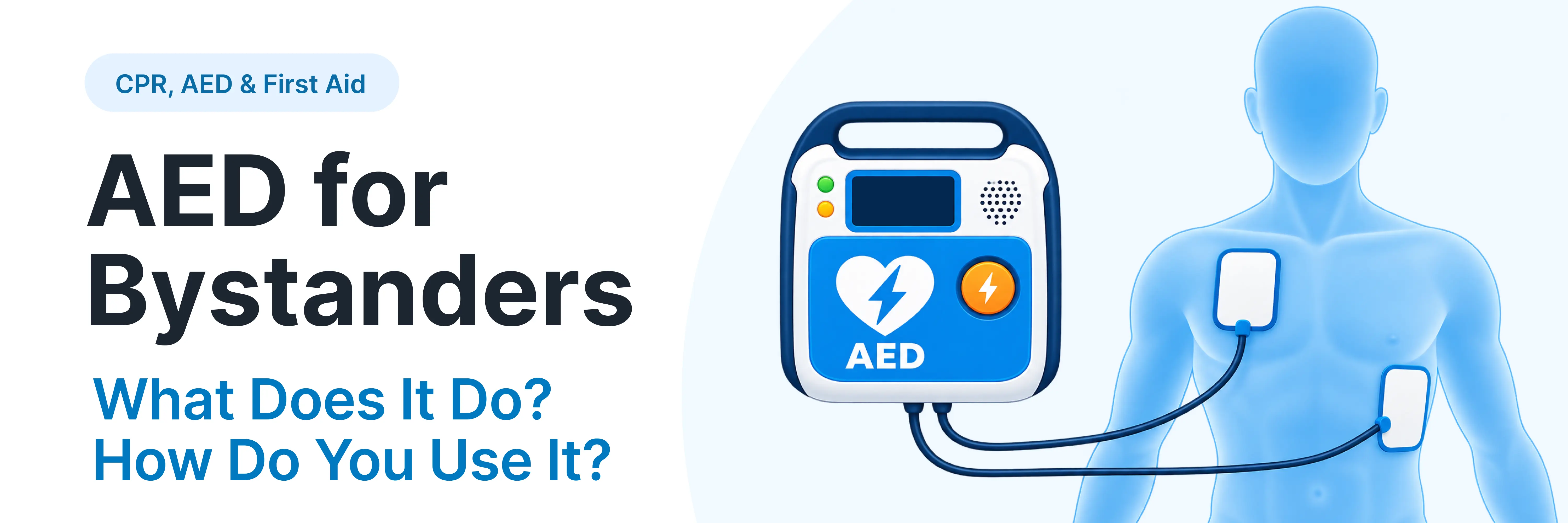
You have probably seen an AED mounted on a wall at an airport, school, gym, or workplace. Most people know that the device can deliver an electrical shock, but what is that shock actually supposed to do?
Movies often make defibrillation look like a dramatic “jump-start” that instantly brings someone back to life. In reality, an AED works differently.
An AED is a critical resuscitation tool designed to work alongside CPR. While chest compressions help maintain limited blood flow to the brain and heart, the AED analyzes the heart’s electrical activity and determines whether a shock may help. Together, early CPR and AED use give the person a better chance of survival.
What Is an AED?
AED stands for automated external defibrillator. It is a portable device designed to help someone experiencing sudden cardiac arrest.
A public-access AED can:
-
Analyze the heart’s electrical activity
-
Determine whether a shock may help
-
Give clear voice instructions and guide the rescuer through the next steps
-
Deliver a shock automatically or instruct the rescuer to press a button
Public AEDs are specifically designed so that ordinary bystanders can use them with minimal training.
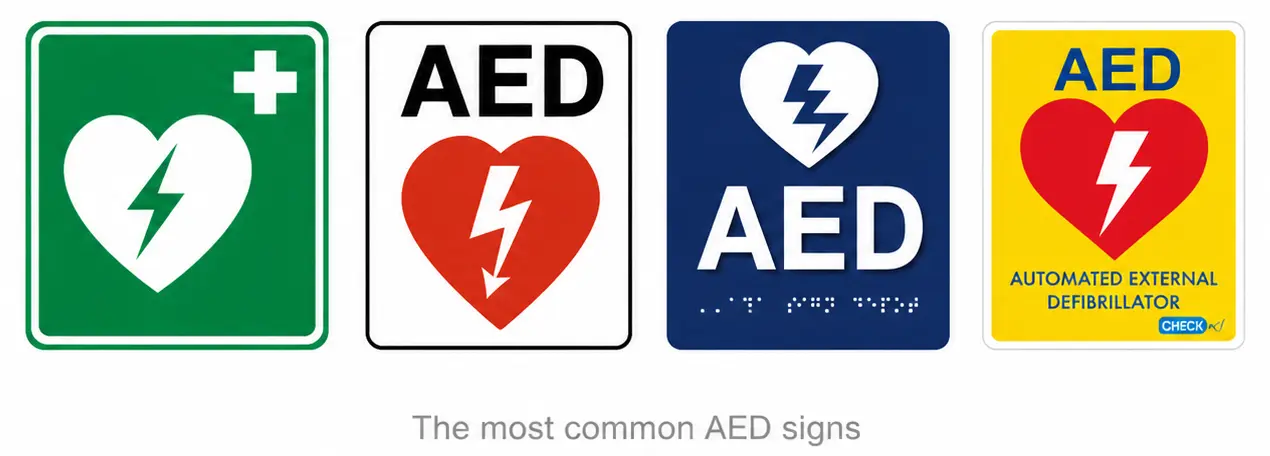
What Does the Electrical Shock Actually Do?
An AED does not “charge” the heart or force it to start beating.
When certain types of chaotic electrical activity are present, the shock briefly passes an electrical current through the heart. This interrupts the disorganized activity and may allow the heart’s natural electrical system to regain control and produce an organized rhythm.
It is sometimes compared with resetting a malfunctioning electrical system. That comparison is not perfect, but it explains the basic idea: the shock interrupts a specific electrical problem — it does not simply restart every stopped heart.
Even when the shock successfully corrects the electrical activity, the heart may not immediately produce a strong pulse. That is why chest compressions must resume immediately after a shock.
Why Doesn’t an AED Shock Every Person in Cardiac Arrest?
Not every cardiac arrest is caused by an electrical rhythm that can benefit from defibrillation.
After analyzing the heart, the AED will give one of two general instructions:
-
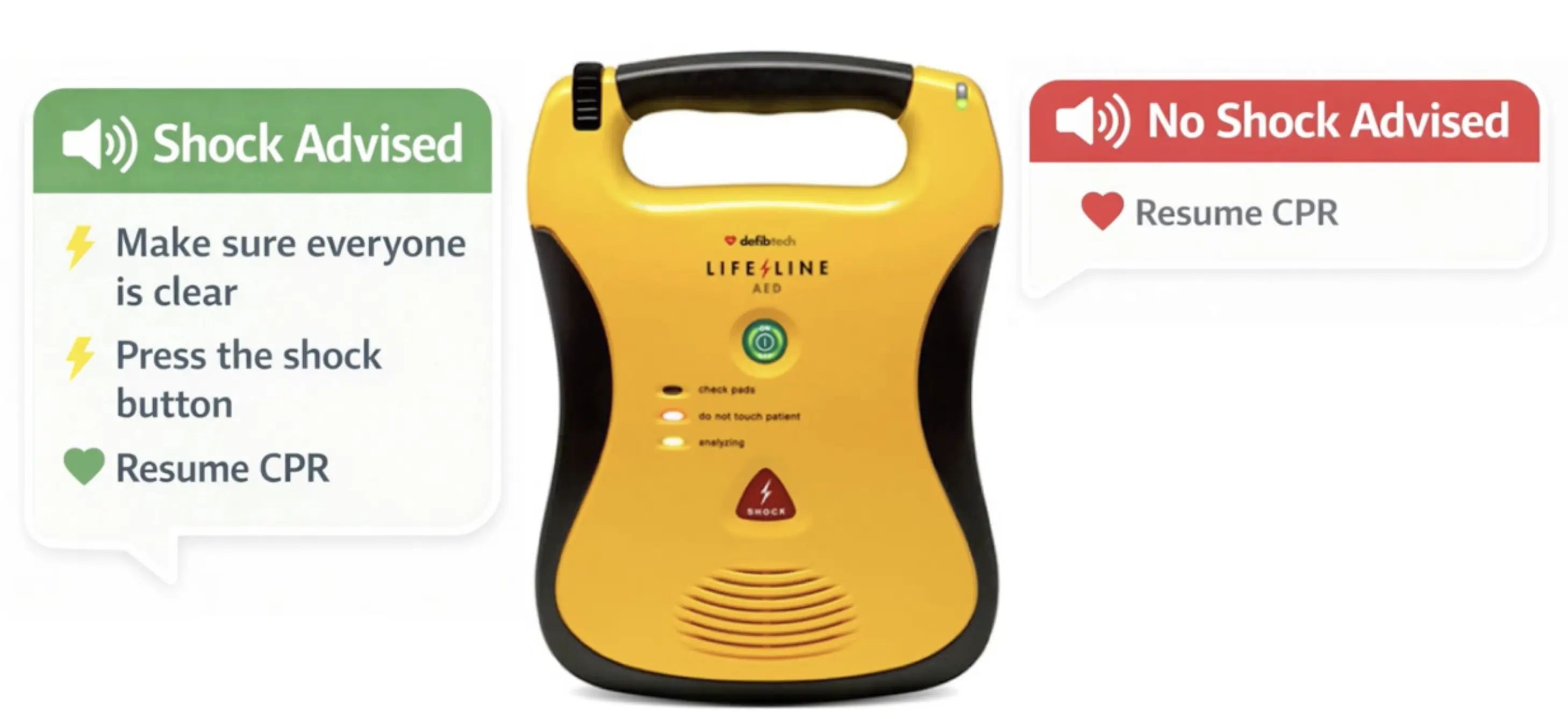
“Shock advised” means the device has detected electrical activity that may respond to a shock.
-
“No shock advised” means the detected rhythm is not one that the AED should shock.
“No shock advised” does not mean that the person has recovered or that nothing more can be done. It means you should immediately continue CPR and follow the AED’s prompts.
CPR and an AED Perform Different Jobs
CPR and an AED are most effective when used together, but they do different things:
|
CPR |
AED |
|---|---|
|
Creates temporary blood flow through chest compressions |
Analyzes the heart’s electrical activity |
|
Helps deliver some oxygenated blood to the brain and heart |
Determines whether an electrical shock may help |
|
Buys time until more advanced care becomes available |
May correct certain dangerous electrical rhythms |
|
Should begin immediately |
Should be used as soon as it becomes available |
In simple terms, CPR helps keep blood moving, while the AED may correct the electrical problem that caused the heart to stop pumping effectively.
For a more complete explanation of how to recognize cardiac arrest, perform CPR, use an AED, and respond to other common emergencies, explore our online CPR, AED & First Aid course.
How to Use an AED
Although AED models may look slightly different, they generally guide rescuers through the same basic sequence.
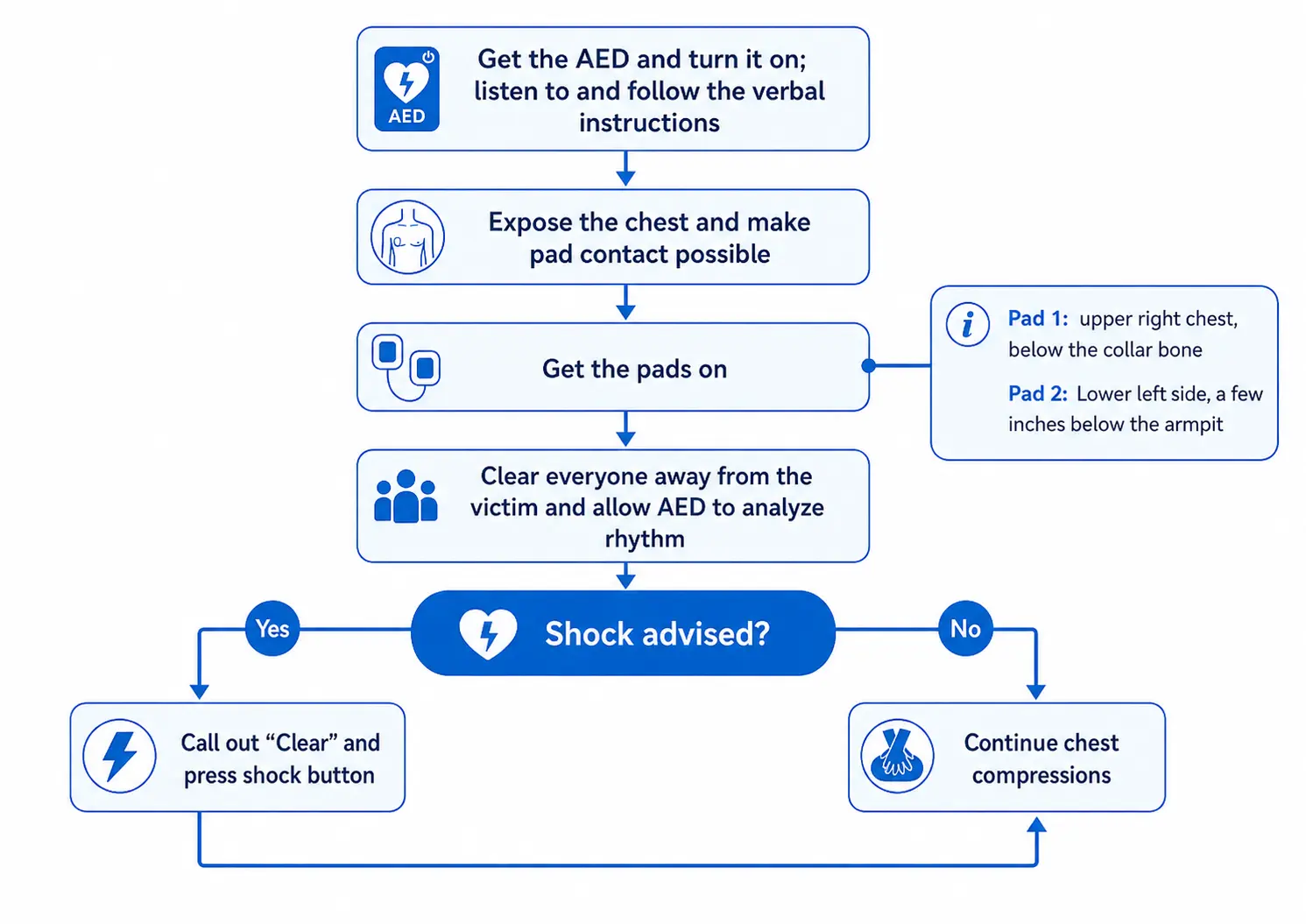
1. Call for Help and Begin CPR
If a person suddenly collapses, does not respond, and is not breathing normally or is only gasping, call 911 or your local emergency number. If another person is available, send them to retrieve an AED while you begin CPR. Continue chest compressions while the AED is being brought to you and prepared.
2. Turn On the AED
Press the power button or open the lid, depending on the model. The AED will begin giving voice or visual instructions. Treat the device like a calm coach: listen carefully and follow each prompt in order.
3. Expose and Prepare the Chest
AED pads must be placed directly on bare skin, not over clothing. Quickly expose the chest and make sure it is dry enough for the pads to stick. If the chest is wet or sweaty, wipe it dry. Do not delay AED use for unnecessary chest preparation.
4. Attach the Pads
Remove the backing from the pads and place them exactly as shown in the diagrams printed on the pads.
For an adult, the usual arrangement is:
-
One pad on the upper right side of the chest
-
One pad on the lower left side of the chest
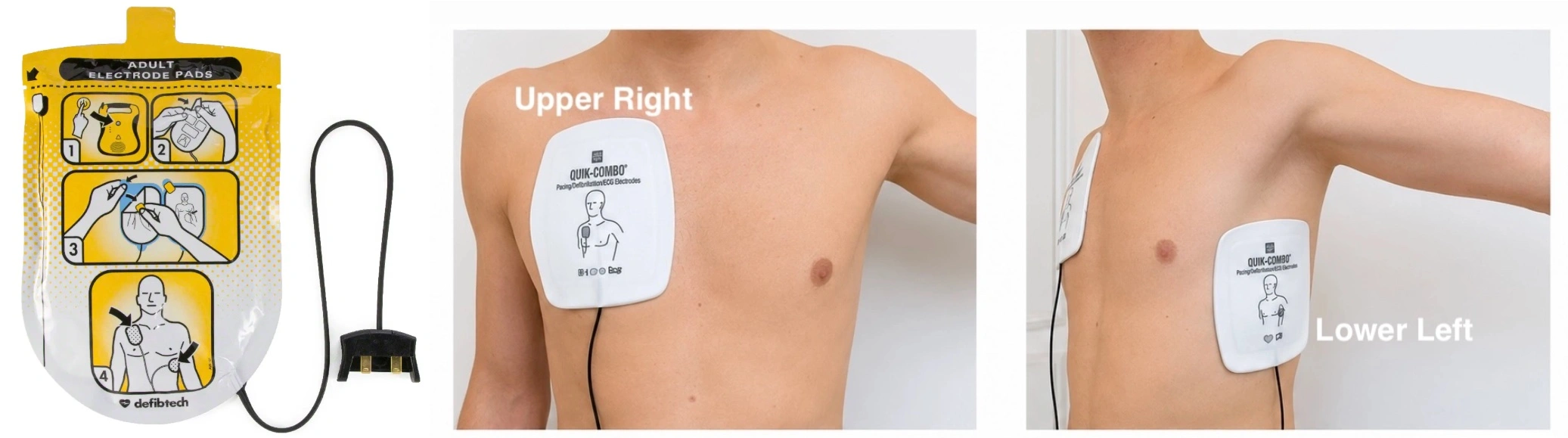
The pads may also show an alternative front-and-back arrangement. Follow the pictures and instructions supplied with the device.
5. Stand Clear During Analysis
When the AED says it is analyzing the rhythm, no one should be touching the person. Movement can interfere with the analysis. Clearly say, “Everyone clear.” and visually confirm that no one is in contact with the person.
6. Deliver the Shock if Advised
If the AED says “Shock advised”, make sure everyone is clear. A semi-automatic AED will instruct you to press the shock button. A fully automatic AED may deliver the shock itself after warning everyone to stand clear.
7. Resume CPR Immediately
After a shock, return to chest compressions immediately. Do not wait to see whether the person wakes up, and do not pause to check whether the shock “worked.”
If the AED says “No shock advised,” the next step is also to resume CPR immediately.
Practical Details That Should Not Delay AED Use
A few situations may require quick adjustments:
-
Wet chest: Wipe the chest dry so the pads can adhere properly.
-
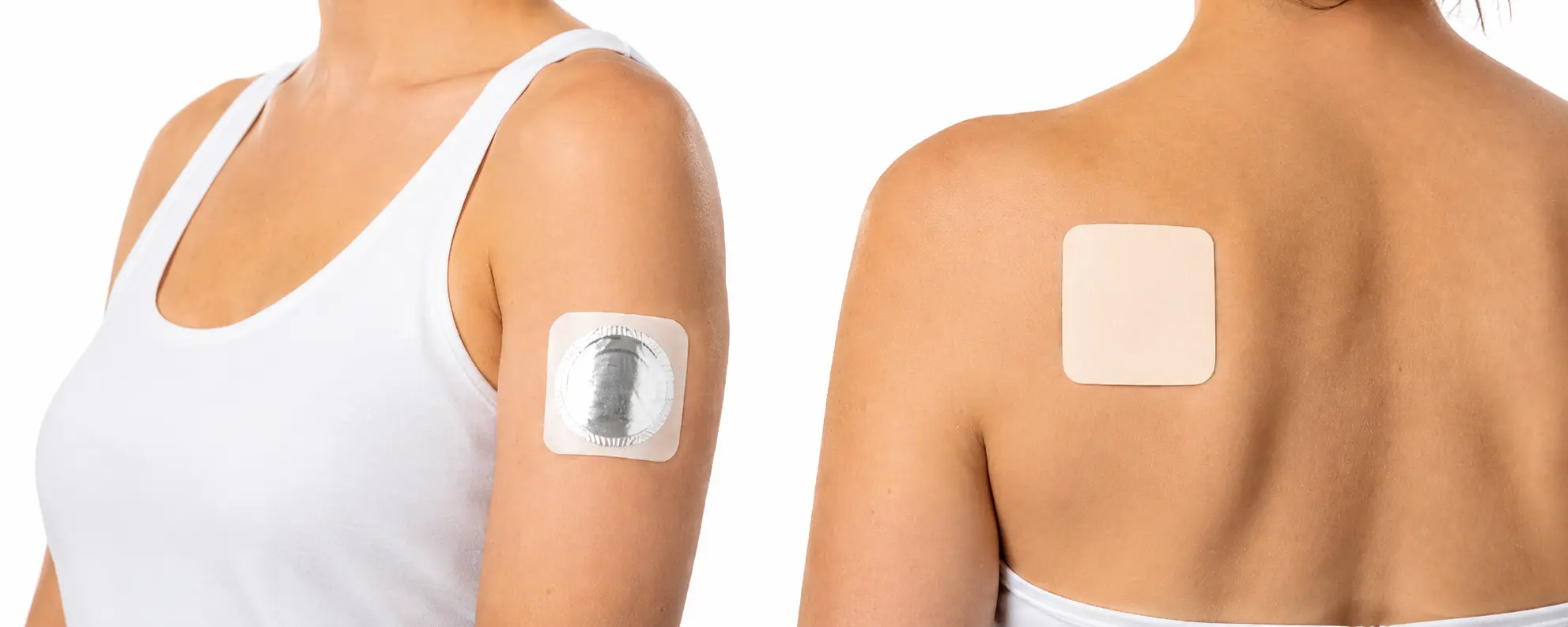
Medication patch: Do not place a pad directly over a medication patch. Remove the patch, wipe the area, and place the pad on clean, dry skin.
-
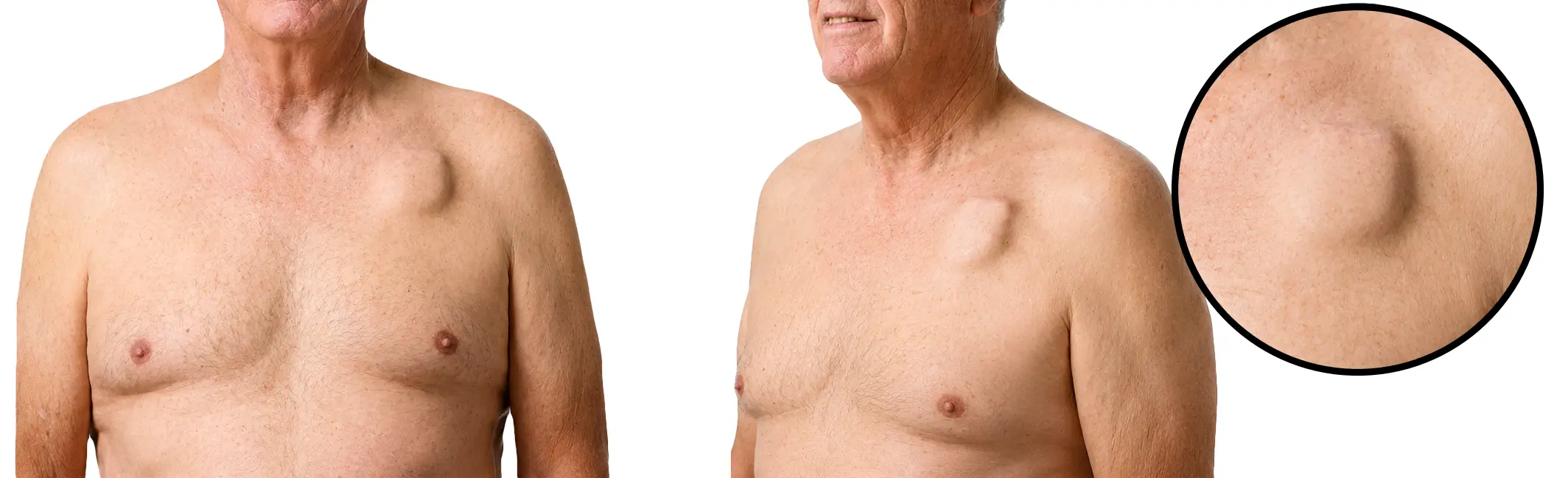
Implanted device: If you notice a small, hard bump beneath the skin, do not place the pad directly over it. Shift the pad slightly while following the placement diagram.
-
Excessive chest hair: Remove only enough hair for the pads to stick if a razor is immediately available. Do not create a long delay.
-
Clothing or a bra: Adjust or remove only what is necessary to place both pads directly on bare skin.
The priority is to attach the AED quickly and follow its instructions.
Can an AED Be Used on a Child?
Yes. An AED should be attached as soon as possible when a child is in cardiac arrest.
For infants and children younger than eight years old, use pediatric pads or a pediatric setting that reduces the delivered energy when available.
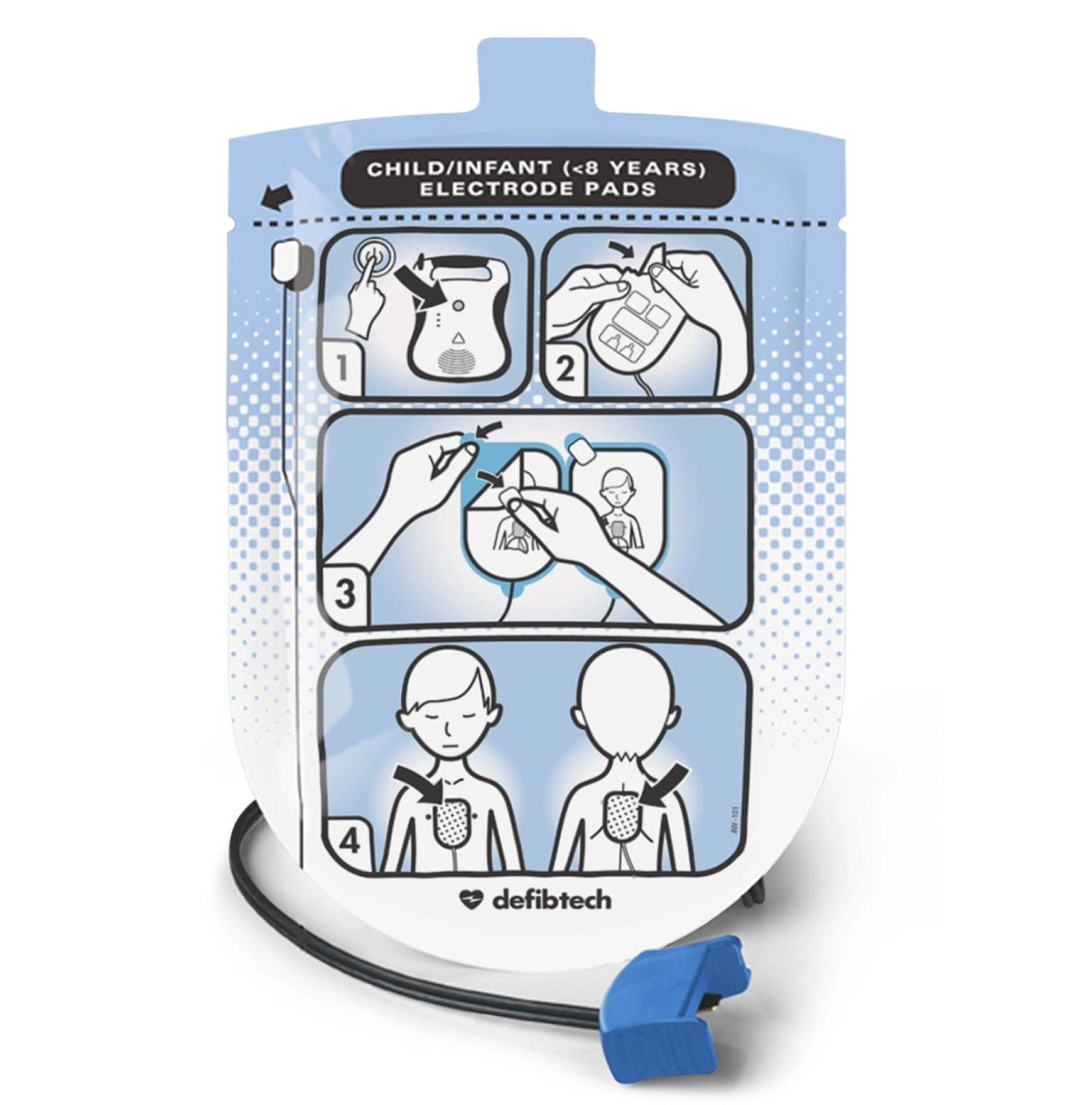
If pediatric pads or a pediatric setting are not available, use a standard AED with adult pads rather than delaying defibrillation. Make sure the pads do not touch or overlap. If there is not enough room to place both pads on the chest, place one pad on the chest and the other on the back.
AED Myths vs. Reality
|
Myth |
Reality |
|---|---|
|
An AED restarts any stopped heart. |
It delivers a shock only when it detects electrical activity that may benefit from defibrillation. |
|
You need to understand heart rhythms. |
The AED analyzes the rhythm and tells you whether a shock is advised. |
|
You have to be a medic to use an AED. |
Public AEDs are designed for bystanders and provide step-by-step instructions. |
|
The shock replaces CPR. |
CPR should continue before the AED is ready and resume immediately after either a shock or a “no shock advised” message. |
|
“No shock advised” means the person is fine. |
It means the detected rhythm should not be shocked. The person may still be in cardiac arrest and still needs CPR. |
|
The person should immediately wake up after the shock. |
A shock may correct the electrical problem, but it does not guarantee an immediate pulse, breathing, or recovery. |
Why Using an AED Quickly Matters
The 2025 American Heart Association Guidelines for CPR and Emergency Cardiovascular Care identify early, high-quality CPR and prompt defibrillation as two of the most important interventions for improving survival from adult cardiac arrest.
CPR should continue while the AED is being brought and prepared. Once the pads are attached, interruptions in chest compressions should be kept as short as possible.
After the AED finishes analyzing or delivers a shock, return to compressions immediately. The goal is to provide as much continuous blood flow as possible while giving the AED an opportunity to correct a shockable electrical problem.
Key Takeaway: An AED is not a device that shocks every stopped heart back to life. It is a smart emergency tool that analyzes the heart, determines whether a shock may help, and guides the rescuer through the response. You do not need to diagnose the rhythm yourself. Turn on the AED, attach the pads, follow its prompts, and continue CPR whenever the device tells you to do so.
Was this article helpful?
Quick tip: Let us know if this article was helpful and discover a special discount code for your upcoming certification.
Preparing for CPR Certification?
Get officially certified in CPR, AED & First Aid online with a flexible course you can finish at your own pace. Complete it in under an hour and receive your provider card instantly.
Get Certified