Adult Foreign-Body Airway Obstruction Algorithm
Last reviewed October 19, 2026 · Based on ILCOR and AHA guidelines 2025-2030
Select the image to open it full size.
Show step-by-step text versionHide step-by-step text version
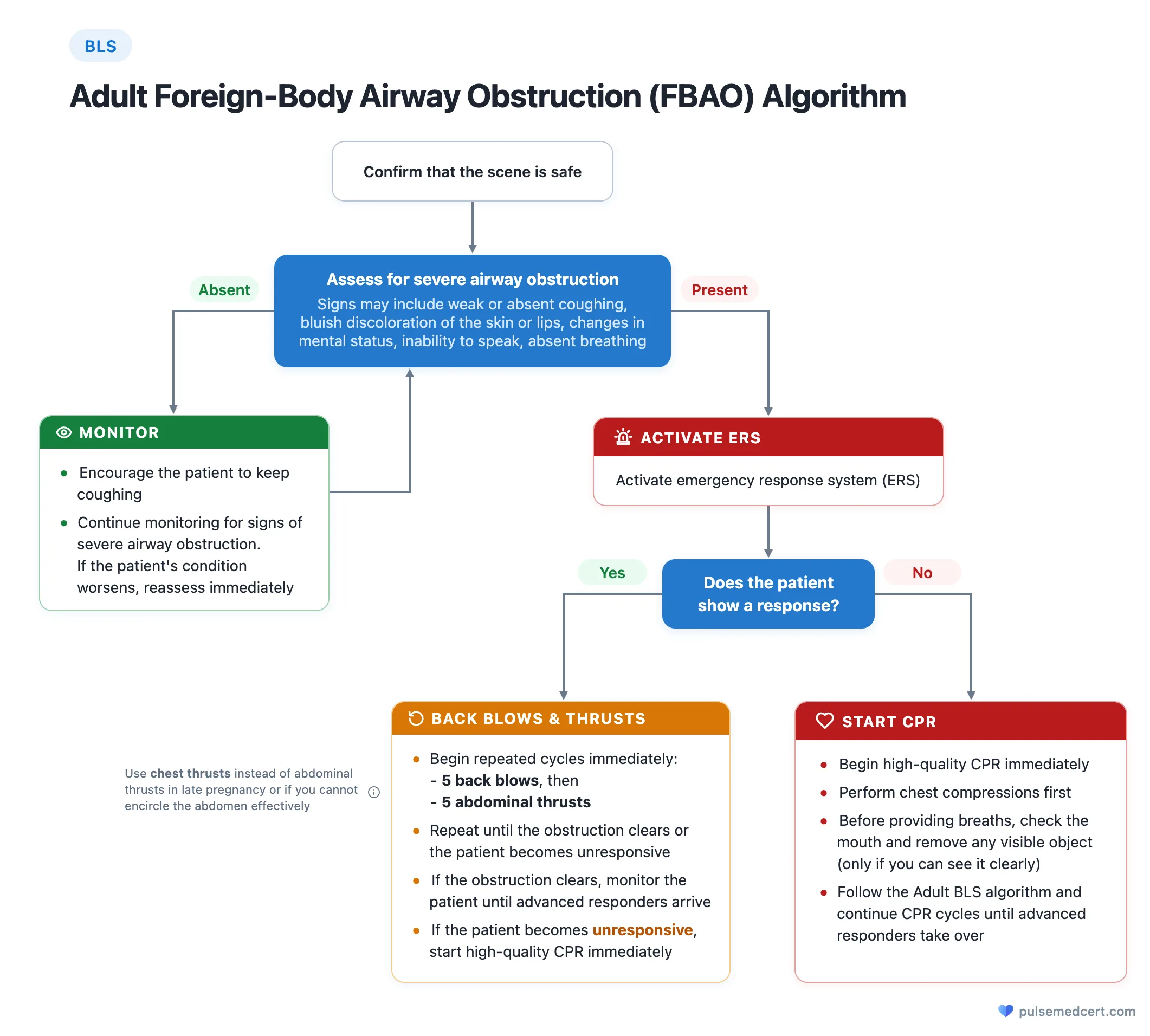
Adult Foreign-Body Airway Obstruction Algorithm: Step by Step
Confirm that the scene is safe
Assess for severe airway obstruction
Signs may include weak or absent coughing, bluish discoloration of the skin or lips, changes in mental status, inability to speak, and absent breathing.
Severe airway obstruction absent: monitor
- Encourage the patient to keep coughing
- Continue monitoring for signs of severe airway obstruction
- If the patient’s condition worsens, reassess immediately
Severe airway obstruction present: activate ERS
Activate the emergency response system (ERS), then check whether the patient shows a response.
Patient responds: back blows and thrusts
- Begin repeated cycles immediately: 5 back blows, then 5 abdominal thrusts
- Use chest thrusts instead of abdominal thrusts in late pregnancy or if you cannot encircle the abdomen effectively
- Repeat until the obstruction clears or the patient becomes unresponsive
- If the obstruction clears, monitor the patient until advanced responders arrive
- If the patient becomes unresponsive, start high-quality CPR immediately
No response: start CPR
- Begin high-quality CPR immediately
- Perform chest compressions first
- Before providing breaths, check the mouth and remove any visible object (only if you can see it clearly)
- Follow the Adult BLS algorithm and continue CPR cycles until advanced responders take over