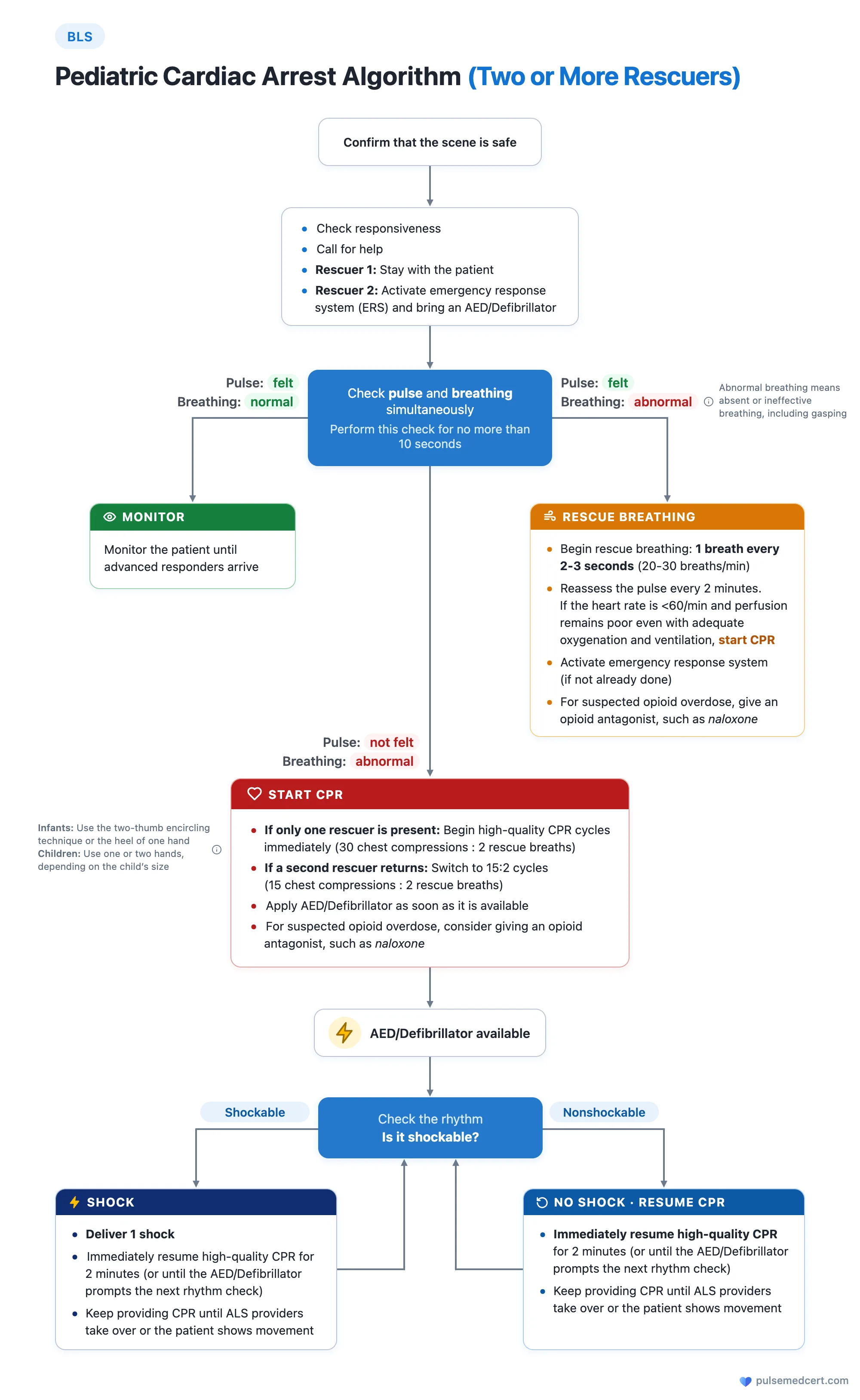
Pediatric Cardiac Arrest Algorithm (Two or More Rescuers)
Last reviewed October 19, 2026 · Based on ILCOR and AHA guidelines 2025-2030
Select the image to open it full size.
Show step-by-step text versionHide step-by-step text version
Pediatric Cardiac Arrest Algorithm (Two or More Rescuers): Step by Step
Confirm that the scene is safe
Check responsiveness and call for help
- Check responsiveness
- Call for help
- Rescuer 1: stay with the patient
- Rescuer 2: activate the emergency response system (ERS) and bring an AED/defibrillator
Check pulse and breathing simultaneously
Perform this check for no more than 10 seconds. Abnormal breathing means absent or ineffective breathing, including gasping.
- Pulse felt, breathing normal: monitor the patient until advanced responders arrive
- Pulse felt, breathing abnormal: begin rescue breathing
- Pulse not felt, breathing abnormal: start CPR
Pulse felt, breathing abnormal: rescue breathing
- Give 1 breath every 2-3 seconds (20-30 breaths/min)
- Reassess the pulse every 2 minutes. If the heart rate is <60/min and perfusion remains poor even with adequate oxygenation and ventilation, start CPR
- Activate the emergency response system (if not already done)
- For suspected opioid overdose, give an opioid antagonist, such as naloxone
Pulse not felt, breathing abnormal: start CPR
- If only one rescuer is present: begin high-quality CPR cycles immediately (30 chest compressions : 2 rescue breaths)
- If a second rescuer returns: switch to 15:2 cycles (15 chest compressions : 2 rescue breaths)
- Apply the AED/defibrillator as soon as it is available
- For suspected opioid overdose, consider giving an opioid antagonist, such as naloxone
- Infants: use the two-thumb encircling technique or the heel of one hand. Children: use one or two hands, depending on the child’s size
Check the rhythm when the AED/defibrillator is available
Is the rhythm shockable?
- Shockable: deliver 1 shock, then immediately resume high-quality CPR for 2 minutes (or until the AED/defibrillator prompts the next rhythm check)
- Nonshockable: immediately resume high-quality CPR for 2 minutes (or until the AED/defibrillator prompts the next rhythm check)
- Keep providing CPR until ALS providers take over or the patient shows movement