Nursing Continuing Education Requirements by State: 2026 Guide
Compare RN continuing education requirements by state, including CE hours, renewal cycles, mandatory topics, and official nursing board sources.
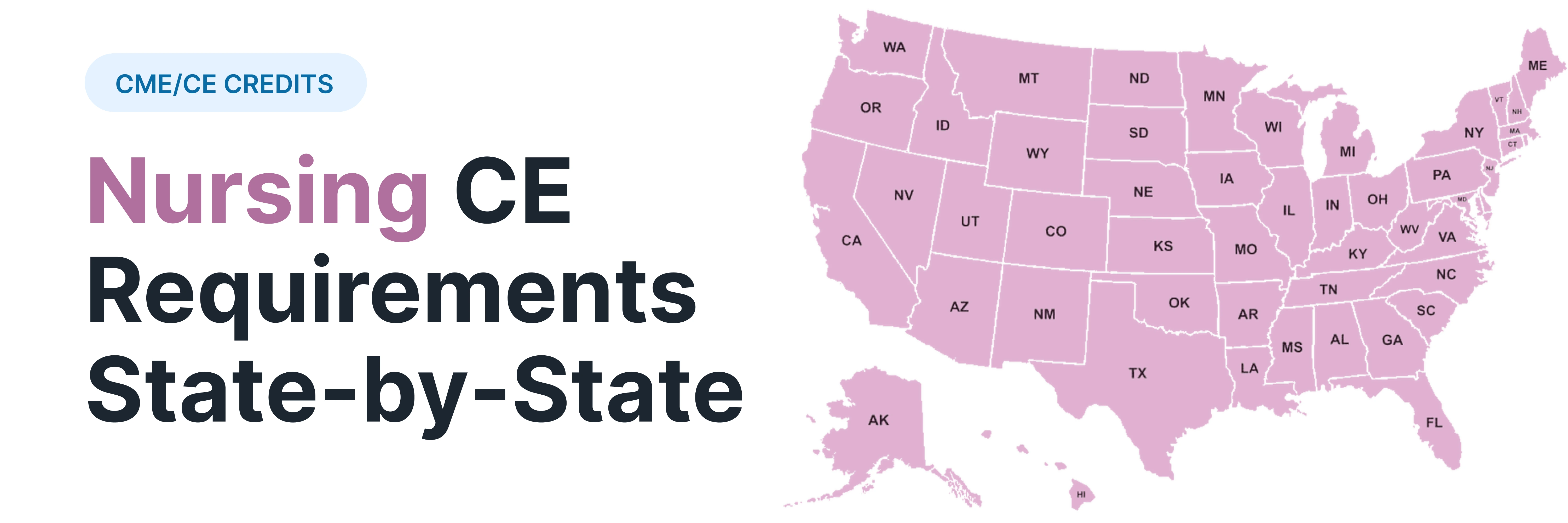
Continuing education requirements for nurses are not uniform across the United States. Some Boards of Nursing require a fixed number of contact hours, others allow nurses to choose among continuing education, clinical practice, national certification, or academic study, and several states do not impose a general CE-hour requirement for routine RN renewal.
This article summarizes the standard requirements for renewing an active registered nurse (RN) license in all 50 states and the District of Columbia. The information is current as of November 2026 and links to official Board of Nursing, state agency, statute, or administrative-rule sources.
Important: LPN/LVN, APRN, first-renewal, reinstatement, inactive-license, and role-specific requirements may differ. Mandatory subjects may apply even when a state has no general CE total. Nurses practicing under a multistate license generally maintain and renew the license issued by their primary state of residence.
Not sure how ANCC contact hours work? Read our article ANCC Contact Hours: Continuing Education for Nurses for an explanation of what ANCC contact hours are, who can use them, how they are calculated, and how eligible contact hours are earned and documented.
Nursing Continuing Education Requirements by State
State | Standard RN renewal requirement |
|---|---|
Alabama | The Alabama Board of Nursing requires 24 contact hours during each two-year license period. A new licensee must complete the Board’s four-hour mandatory class before the first renewal. APRNs must include six hours of pharmacology in the 24-hour total. |
Alaska | The Alaska Board of Nursing requires nurses to complete two of three methods during each biennial period: |
Arizona | The Arizona State Board of Nursing has no general CE-hour requirement for routine RN renewal. An RN must instead show 960 hours of nursing practice during the previous five years or qualify through a recent nursing program, degree, refresher course, or another Board-listed route. RN licenses renew every four years. |
Arkansas | The Arkansas State Board of Nursing requires one of the following each biennium: 15 contact hours of practice-focused CE, current national nursing certification or recertification, or one academic credit in nursing with a grade of C or better. APRNs with prescriptive authority need 5 additional pharmacotherapeutics hours. |
California | The California Board of Registered Nursing requires 30 contact hours from a Board-recognized provider during each two-year renewal cycle. Most nurses are exempt from CE for their first renewal. |
Colorado | The Colorado State Board of Nursing’s current rules do not impose a general CE-hour minimum for routine RN or LPN renewal. Separate competency requirements apply when an inactive or expired license is reactivated or reinstated. |
Connecticut | The Connecticut Department of Public Health does not require a general annual CE total for RNs. Actively practicing RNs and LPNs must complete two contact hours on screening for post-traumatic stress disorder, depression, grief, suicide risk, and suicide prevention for the first applicable renewal and once every six years thereafter. Licenses renew annually. |
Delaware | The Delaware Board of Nursing requires RNs to complete 30 contact hours during each two-year renewal period. The total must include three hours related to substance abuse and one hour covering sexual abuse, exploitation, domestic violence, human trafficking, or mandatory reporting. RNs must also document either 1,000 practice hours in the previous five years, 400 practice hours in the previous two years, or completion of a nursing refresher course in the previous two years. LPNs require 24 CE hours. |
District of Columbia | The District of Columbia Board of Nursing requires RNs to complete 24 CE hours per standard two-year renewal cycle, including two hours of LGBTQ+ cultural competency and 2.5 hours in D.C. public-health priority topics. First renewals are exempt. Temporary prorating rules apply to licenses shortened during the transition to birth-month renewals. |
Florida | The Florida Board of Nursing requires 24 hours per biennium. The total includes required education in prevention of medical errors, Florida laws and rules, human trafficking, and, every other biennium, recognizing impairment in the workplace. Two hours of domestic-violence education are required every third biennium in addition to the standard 24 hours. A one-hour HIV/AIDS course is required before the first renewal. |
Georgia | The Georgia Board of Nursing requires RNs to meet one of five continuing-competency routes every two years. Options include 30 CE hours, current national certification, completion of an accredited nursing or related academic program, employer-verified competency plus 500 hours of practice, or another Board-approved activity. |
Hawaii | The Hawaii Board of Nursing requires one approved learning-activity option per biennium. The CE route is 30 contact hours; alternatives include national certification, a Board-approved refresher course, qualifying academic study, precepting, research, publication, teaching, or a nurse residency program. Different options may not be combined. |
Idaho | The Idaho Board of Nursing’s current rules contain no general CE requirement for routine RN or LPN renewal. Idaho began transitioning nursing licenses to a biennial, birth-date-based renewal schedule in 2026. |
Illinois | The Illinois Department of Financial and Professional Regulation requires RNs and LPNs to complete 20 CE hours per two-year renewal cycle. Required subjects include one hour of sexual-harassment prevention and one hour of implicit-bias awareness each cycle; cultural-competency and Alzheimer’s/dementia education are required for the first applicable renewal and once every six years thereafter. |
Indiana | The Indiana State Board of Nursing has no CE requirement for routine RN or LPN renewal. APRNs with prescriptive authority must complete 30 contact hours, including at least eight hours of pharmacology, during the renewal period. |
Iowa | The Iowa Board of Nursing requires 36 contact hours every three years. Current national nursing certification or recertification is recognized as 36 hours. CPR and BLS do not count toward Iowa’s CE total, and mandatory-reporter training may apply separately. |
Kansas | The Kansas State Board of Nursing requires RNs and LPNs to complete 30 contact hours of approved continuing nursing education during the most recent licensing period. A Kansas CNE contact hour equals 50 minutes. |
Kentucky | The Kentucky Board of Nursing requires annual continuing competency. The standard route is 14 contact hours earned from November 1 through October 31. Alternatives include seven contact hours plus a satisfactory employment evaluation, current national nursing certification, qualifying academic work, precepting, publication, teaching, or nursing research. |
Louisiana | The Louisiana State Board of Nursing requires an RN to complete either 30 Board-approved contact hours or at least 900 nursing-practice hours during the two-year licensure period. Additional exceptions and routes may apply to recent licensees. |
Maine | Maine does not impose a general CE-hour requirement for routine RN or LPN renewal. The Maine Board of Nursing renews these licenses every two years, while the RN renewal statute requires the renewal application and fee but no CE total. APRNs have separate CE requirements. |
Maryland | The Maryland Board of Nursing does not set a routine CE-hour minimum for active RN/LPN renewal. Instead, an active nurse must be able to document 1,000 hours of nursing practice within the previous five years or complete a Board-approved refresher course. |
Massachusetts | The Massachusetts Board of Registration in Nursing requires 15 contact hours during the two years immediately preceding renewal. Nurses are exempt from CE for their first renewal. Separate one-time or subject-specific training mandates may also apply. |
Michigan | The Michigan Board of Nursing requires 25 CE hours during each two-year cycle, including at least two hours in pain and symptom management. Licensees must also complete one hour of implicit-bias training for each year of the license cycle and a one-time human-trafficking training. |
Minnesota | The Minnesota Board of Nursing requires an RN to complete 24 contact hours during a typical 24-month participation period. Current nursing specialty certification and certain qualifying professional activities may also meet the continuing-education requirement. LPNs require 12 hours. |
Mississippi | The Mississippi Board of Nursing has no routine CE requirement for maintaining or renewing an RN or LPN license. A nurse who has been out of practice for more than five years must complete 20 accepted contact hours earned during the preceding two years. |
Missouri | The Missouri State Board of Nursing does not require CE hours for routine RN or LPN renewal. Current renewal rules require the application, fee, and workforce information but do not establish a general CE minimum. |
Montana | The Montana Board of Nursing no longer requires continuing-education contact hours for routine RN, LPN, or APRN renewal. Nurses remain responsible for maintaining competence in their area of practice. |
Nebraska | The Nebraska Board of Nursing requires continuing competency. The common route is at least 500 nursing-practice hours during the previous five years plus 20 approved nursing CE hours during the previous two years. Recent graduation, a refresher course, current national certification, or a qualifying professional portfolio may satisfy alternative routes. |
Nevada | The Nevada State Board of Nursing requires 30 CE hours during each two-year renewal period. Four of the 30 hours must address cultural competency each cycle. RNs and LPNs also complete a one-time four-hour bioterrorism course; additional role- or setting-specific subjects may apply. |
New Hampshire | Under the New Hampshire Nurse Practice Act, RNs and LPNs must complete 30 hours of continuing education every two years. Current national certification may satisfy the requirement under Board rules. APRNs have additional specialty and pharmacology requirements. |
New Jersey | The New Jersey Board of Nursing requires 30 contact hours during the two years preceding renewal. The total must include one contact hour concerning prescription opioids, alternatives for pain treatment, and the risks and signs of abuse, addiction, and diversion. |
New Mexico | The New Mexico Board of Nursing requires RNs to complete 30 contact hours during each 24-month period. Current national nursing certification or recertification related to the RN’s specialty may be used in place of the 30-hour CE requirement. |
New York | The New York State Education Department has no general CE-hour total for RN registration renewal. Practicing RNs and LPNs must complete approved infection-control coursework every four years unless exempt. The nursing license itself is valid for life, but registration must generally be renewed every three years to practice. |
North Carolina | The North Carolina Board of Nursing requires one of eight continuing-competence options during each two-year licensure period. Common routes include 30 contact hours, 15 contact hours plus 640 hours of active practice, current national certification, qualifying academic study, a refresher course, or specified nursing projects, publication, or teaching activities. |
North Dakota | The North Dakota Board of Nursing requires 12 contact hours during the preceding two years and at least 400 hours of nursing practice during the preceding four years. Recent graduates and nurses who recently completed a refresher course may qualify for exceptions. |
Ohio | The Ohio Board of Nursing requires RNs and LPNs to complete 24 contact hours per renewal period, including at least one Category A hour covering the Ohio Nurse Practice Act and Board rules. The first renewal after initial NCLEX licensure is exempt. |
Oklahoma | The Oklahoma Board of Nursing requires one continuing-qualification route within the previous two years: 520 hours of licensed nursing employment, 24 contact hours of nursing CE, current specialty certification, a Board-approved refresher course, or six semester hours of nursing coursework. Routes may not be partially combined. |
Oregon | For renewals in 2026, the Oregon State Board of Nursing requires one hour of pain-management education within the preceding 36 months and two hours of cultural-competency education within the preceding 48 months; there is no general RN/LPN CE total yet. Beginning January 1, 2028, RN and LPN applicants will need 20 CE hours within two years, with the required pain-management and cultural-competency education counting toward that total. |
Pennsylvania | The Pennsylvania State Board of Nursing requires 30 CE hours every two years, including two hours of approved child-abuse recognition and reporting training. Beginning May 1, 2026, RNs must also complete a one-time two-hour organ-donation education requirement within five years. |
Rhode Island | The Rhode Island Department of Health requires 10 continuing-education hours during each two-year cycle, including two hours related to substance abuse. Nurses must also complete one hour of Alzheimer’s disease training once during their career. |
South Carolina | The South Carolina Board of Nursing requires one continuing-competency route every two years: 30 contact hours, maintenance or renewal of recognized national certification, completion of an approved academic program in nursing or a related field, or employer verification of competency. |
South Dakota | South Dakota has no general CE-hour requirement for routine RN or LPN renewal. The state’s official nursing rules list the former continuing-education chapter as repealed. Nurses who have not practiced for an extended period may be subject to reentry requirements. |
Tennessee | The Tennessee Board of Nursing requires an RN or LPN to document two continuing-competence activities during each biennial renewal period. Ten contact hours of nursing CE may serve as one activity; other choices include an employer or peer evaluation, national certification, professional goals, volunteer service, teaching, publication, academic credit, or a refresher program. |
Texas | The Texas Board of Nursing requires 20 contact hours in the nurse’s area of practice during each two-year license period or maintenance or renewal of a Board-approved national nursing certification. Targeted education requirements may also apply based on the nurse’s role, patient population, and practice setting. Beginning September 1, 2026, renewal applicants must document compliance through the Texas Nurse Portal CE Module. |
Utah | The Utah Division of Professional Licensing requires one route during each two-year period: 400 hours of licensed practice, 200 practice hours plus 15 CE hours, or 30 CE hours. Renewal applicants must also complete at least one of Utah’s listed suicide-prevention trainings. |
Vermont | Under the Vermont Board of Nursing rules, an RN or LPN must meet one route for biennial renewal: 400 practice hours during the previous two years, 960 practice hours during the previous five years, 20 qualifying CE hours during the previous two years, or current nationally recognized certification. |
Virginia | The Virginia Board of Nursing requires one approved continuing-competency option every two years. Common routes include 30 contact hours, 15 contact hours plus 640 hours of active practice, current specialty certification, qualifying academic education, a refresher course, or specified research, publication, or teaching activities. |
Washington | The Washington State Board of Nursing requires RNs to complete eight CE hours and 96 practice hours each year. Two of the eight hours must address health equity. RNs must also complete a one-time six-hour training in suicide assessment, treatment, and management. |
West Virginia | The West Virginia RN Board requires 12 contact hours from a Board-approved provider during each two-year renewal cycle. Newly licensed RNs must complete three contact hours on safe prescribing and drug diversion within one year of initial licensure unless a permitted waiver applies. |
Wisconsin | The Wisconsin Department of Safety and Professional Services states that no continuing education is required for routine RN renewal. |
Wyoming | The Wyoming State Board of Nursing requires one competency route during each two-year period: 400 hours of nursing practice, 40 CE hours, passing the NCLEX, completing a refresher course, or completing a nursing degree beyond the nurse’s basic education. CE is an optional route rather than a universal requirement. |
Was this article helpful?
Quick tip: Let us know if this article was helpful and discover a special discount code for your upcoming certification.
Get Certified. Earn CME/CE Credits.
Complete an ACLS, PALS, or BLS certification or recertification course and earn eligible, profession-specific continuing education credit upon successful completion.
Explore All Certifications