Pediatric Bradycardia With a Pulse Algorithm
Last reviewed October 19, 2026 · Based on ILCOR and AHA guidelines 2025-2030
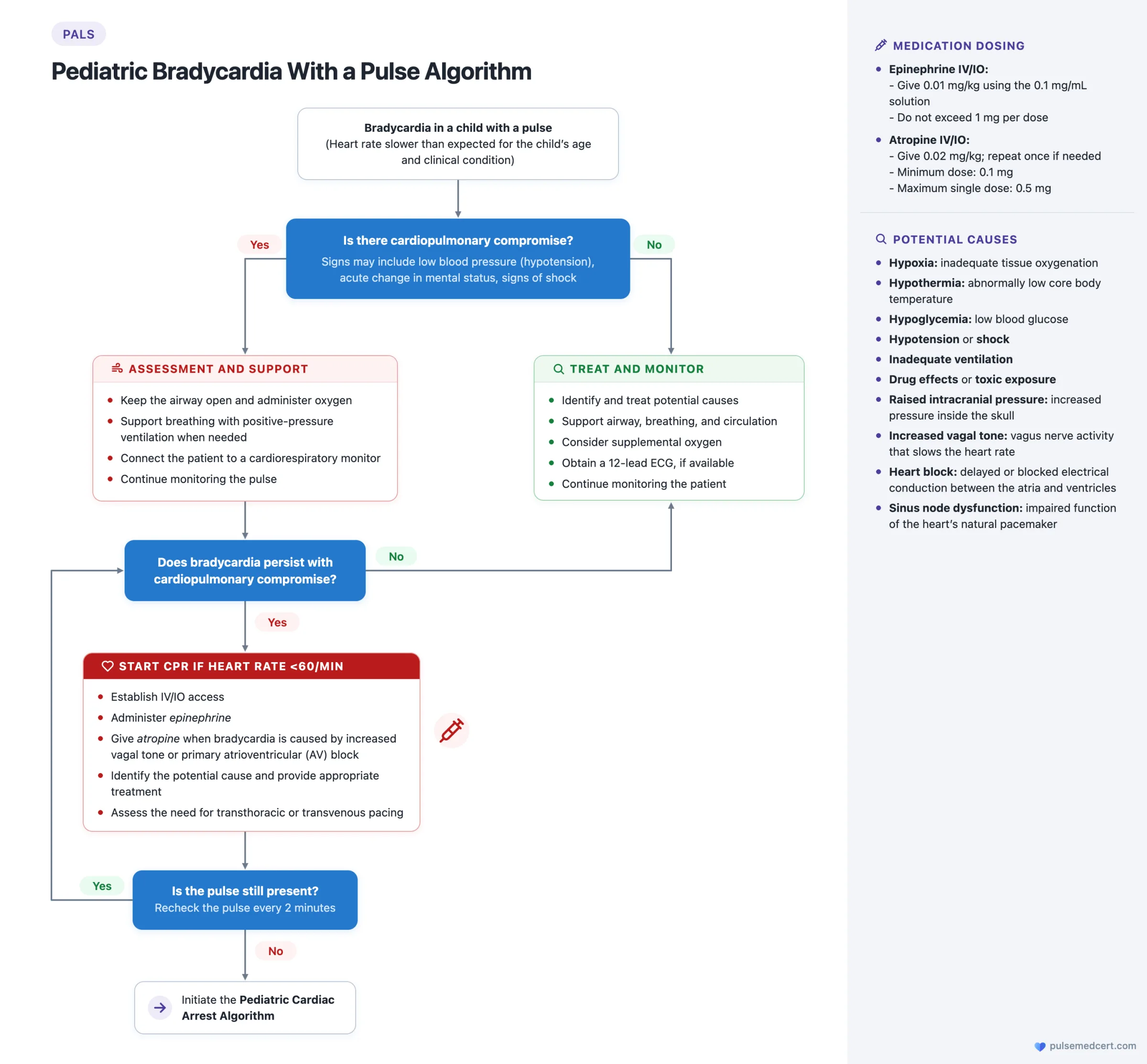
Select the image to open it full size.
Show step-by-step text versionHide step-by-step text version
Pediatric Bradycardia With a Pulse Algorithm: Step by Step
Bradycardia in a child with a pulse
The heart rate is slower than expected for the child’s age and clinical condition.
Is there cardiopulmonary compromise?
Signs may include low blood pressure (hypotension), acute change in mental status, and signs of shock.
- Yes: provide assessment and support
- No: treat and monitor
Compromise present: assessment and support
Then check whether bradycardia persists with cardiopulmonary compromise.
- Keep the airway open and administer oxygen
- Support breathing with positive-pressure ventilation when needed
- Connect the patient to a cardiorespiratory monitor
- Continue monitoring the pulse
No compromise: treat and monitor
- Identify and treat potential causes
- Support airway, breathing, and circulation
- Consider supplemental oxygen
- Obtain a 12-lead ECG, if available
- Continue monitoring the patient
Does bradycardia persist with cardiopulmonary compromise?
- No: treat and monitor
- Yes: start CPR if the heart rate is <60/min
Start CPR if the heart rate is <60/min
- Establish IV/IO access
- Administer epinephrine
- Give atropine when bradycardia is caused by increased vagal tone or primary atrioventricular (AV) block
- Identify the potential cause and provide appropriate treatment
- Assess the need for transthoracic or transvenous pacing
Is the pulse still present?
Recheck the pulse every 2 minutes.
- Yes: return to the check for persistent bradycardia with cardiopulmonary compromise
- No: initiate the Pediatric Cardiac Arrest Algorithm
Medication dosing
- Epinephrine IV/IO: give 0.01 mg/kg using the 0.1 mg/mL solution. Do not exceed 1 mg per dose
- Atropine IV/IO: give 0.02 mg/kg; repeat once if needed. Minimum dose 0.1 mg; maximum single dose 0.5 mg
Potential causes
- Hypoxia: inadequate tissue oxygenation
- Hypothermia: abnormally low core body temperature
- Hypoglycemia: low blood glucose
- Hypotension or shock
- Inadequate ventilation
- Drug effects or toxic exposure
- Raised intracranial pressure: increased pressure inside the skull
- Increased vagal tone: vagus nerve activity that slows the heart rate
- Heart block: delayed or blocked electrical conduction between the atria and ventricles
- Sinus node dysfunction: impaired function of the heart’s natural pacemaker