Pediatric Tachyarrhythmia With a Pulse Algorithm
Last reviewed October 19, 2026 · Based on ILCOR and AHA guidelines 2025-2030
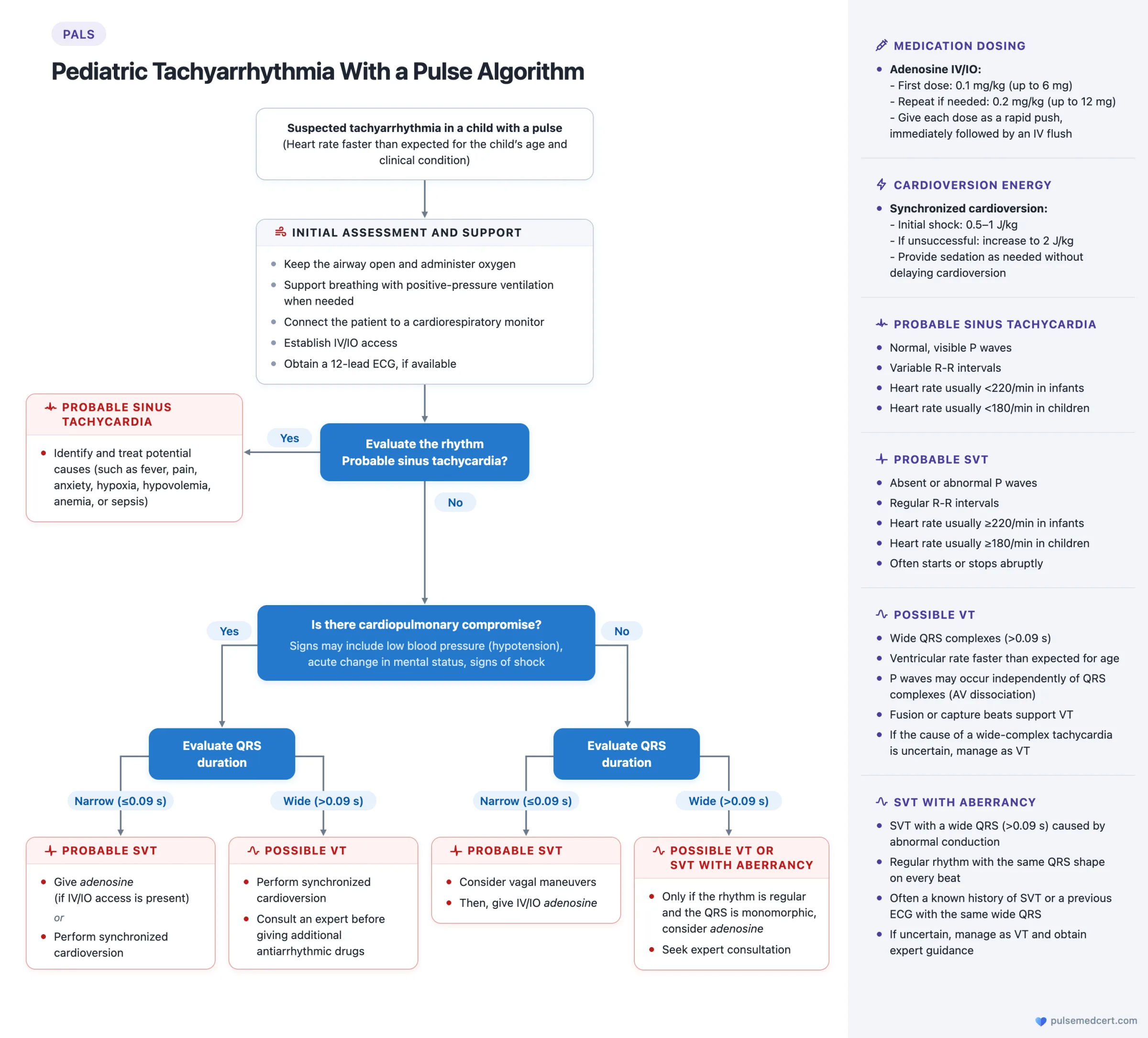
Select the image to open it full size.
Show step-by-step text versionHide step-by-step text version
Pediatric Tachyarrhythmia With a Pulse Algorithm: Step by Step
Suspected tachyarrhythmia in a child with a pulse
The heart rate is faster than expected for the child’s age and clinical condition.
Initial assessment and support
- Keep the airway open and administer oxygen
- Support breathing with positive-pressure ventilation when needed
- Connect the patient to a cardiorespiratory monitor
- Establish IV/IO access
- Obtain a 12-lead ECG, if available
Evaluate the rhythm: probable sinus tachycardia?
- Yes: identify and treat potential causes (such as fever, pain, anxiety, hypoxia, hypovolemia, anemia, or sepsis)
- No: check for cardiopulmonary compromise
Is there cardiopulmonary compromise?
Signs may include low blood pressure (hypotension), acute change in mental status, and signs of shock. In both cases, evaluate the QRS duration next.
With cardiopulmonary compromise
- Narrow QRS (≤0.09 s), probable SVT: give adenosine (if IV/IO access is present) or perform synchronized cardioversion
- Wide QRS (>0.09 s), possible VT: perform synchronized cardioversion. Consult an expert before giving additional antiarrhythmic drugs
Without cardiopulmonary compromise
- Narrow QRS (≤0.09 s), probable SVT: consider vagal maneuvers, then give IV/IO adenosine
- Wide QRS (>0.09 s), possible VT or SVT with aberrancy: only if the rhythm is regular and the QRS is monomorphic, consider adenosine. Seek expert consultation
Medication dosing
- Adenosine IV/IO, first dose: 0.1 mg/kg (up to 6 mg)
- Adenosine IV/IO, repeat if needed: 0.2 mg/kg (up to 12 mg)
- Give each dose as a rapid push, immediately followed by an IV flush
Cardioversion energy
- Synchronized cardioversion, initial shock: 0.5-1 J/kg
- If unsuccessful: increase to 2 J/kg
- Provide sedation as needed without delaying cardioversion
Probable sinus tachycardia
- Normal, visible P waves
- Variable R-R intervals
- Heart rate usually <220/min in infants and <180/min in children
Probable SVT
- Absent or abnormal P waves
- Regular R-R intervals
- Heart rate usually ≥220/min in infants and ≥180/min in children
- Often starts or stops abruptly
Possible VT
- Wide QRS complexes (>0.09 s)
- Ventricular rate faster than expected for age
- P waves may occur independently of QRS complexes (AV dissociation)
- Fusion or capture beats support VT
- If the cause of a wide-complex tachycardia is uncertain, manage as VT
SVT with aberrancy
- SVT with a wide QRS (>0.09 s) caused by abnormal conduction
- Regular rhythm with the same QRS shape on every beat
- Often a known history of SVT or a previous ECG with the same wide QRS
- If uncertain, manage as VT and obtain expert guidance