Adult Bradycardia With a Pulse Algorithm
Last reviewed October 19, 2026 · Based on ILCOR and AHA guidelines 2025-2030
Select the image to open it full size.
Show step-by-step text versionHide step-by-step text version
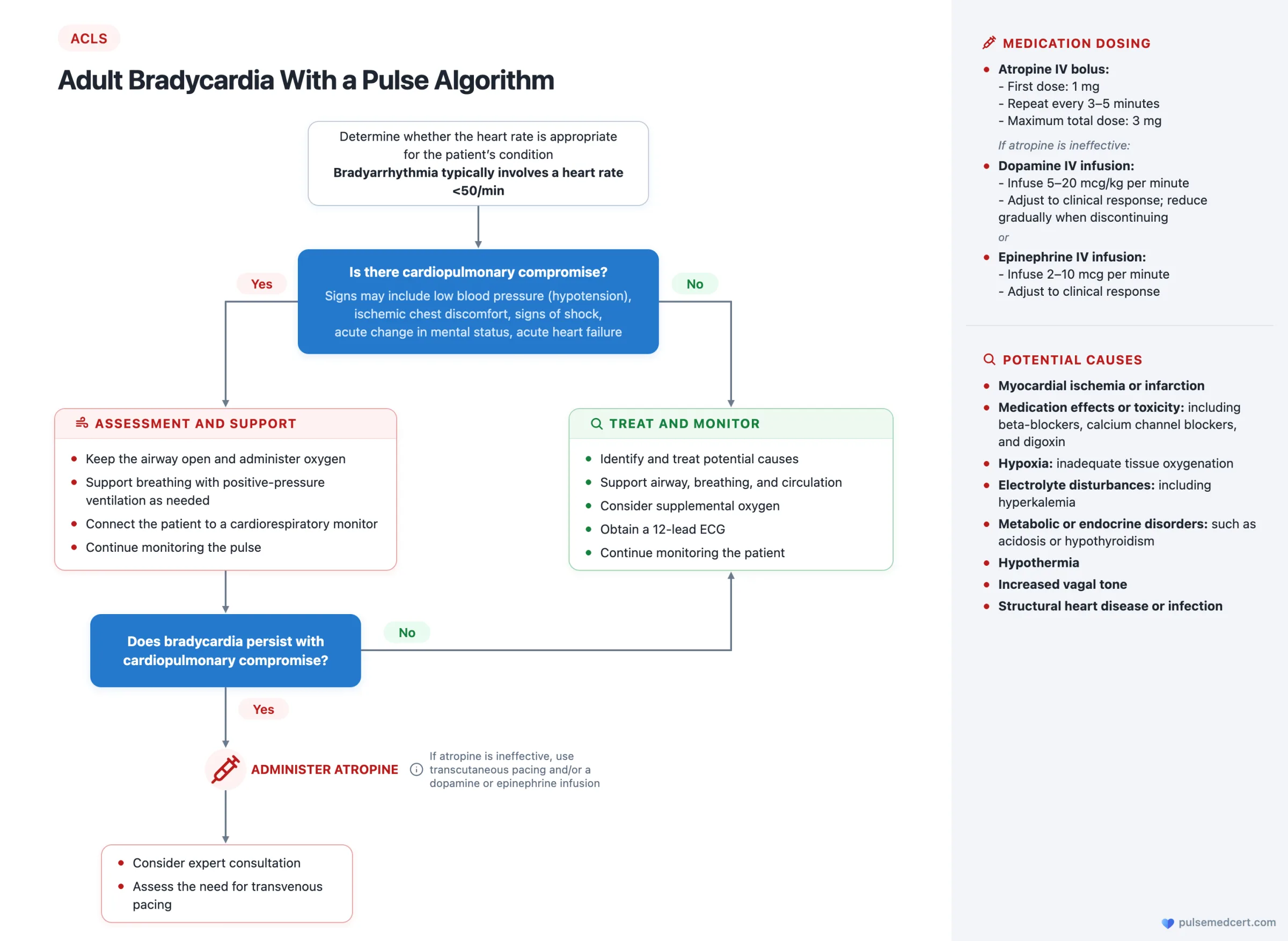
Adult Bradycardia With a Pulse Algorithm: Step by Step
Assess the heart rate
Determine whether the heart rate is appropriate for the patient’s condition. Bradyarrhythmia typically involves a heart rate <50/min.
Is there cardiopulmonary compromise?
Signs may include low blood pressure (hypotension), ischemic chest discomfort, signs of shock, acute change in mental status, and acute heart failure.
- Yes: provide assessment and support
- No: treat and monitor
Compromise present: assessment and support
Then check whether bradycardia persists with cardiopulmonary compromise.
- Keep the airway open and administer oxygen
- Support breathing with positive-pressure ventilation as needed
- Connect the patient to a cardiorespiratory monitor
- Continue monitoring the pulse
No compromise: treat and monitor
- Identify and treat potential causes
- Support airway, breathing, and circulation
- Consider supplemental oxygen
- Obtain a 12-lead ECG
- Continue monitoring the patient
Does bradycardia persist with cardiopulmonary compromise?
- No: treat and monitor
- Yes: administer atropine
Administer atropine
If atropine is ineffective, use transcutaneous pacing and/or a dopamine or epinephrine infusion.
Next steps
- Consider expert consultation
- Assess the need for transvenous pacing
Medication dosing
- Atropine IV bolus: first dose 1 mg; repeat every 3-5 minutes; maximum total dose 3 mg
- If atropine is ineffective, dopamine IV infusion: infuse 5-20 mcg/kg per minute; adjust to clinical response and reduce gradually when discontinuing
- Or epinephrine IV infusion: infuse 2-10 mcg per minute; adjust to clinical response
Potential causes
- Myocardial ischemia or infarction
- Medication effects or toxicity, including beta-blockers, calcium channel blockers, and digoxin
- Hypoxia: inadequate tissue oxygenation
- Electrolyte disturbances, including hyperkalemia
- Metabolic or endocrine disorders, such as acidosis or hypothyroidism
- Hypothermia
- Increased vagal tone
- Structural heart disease or infection